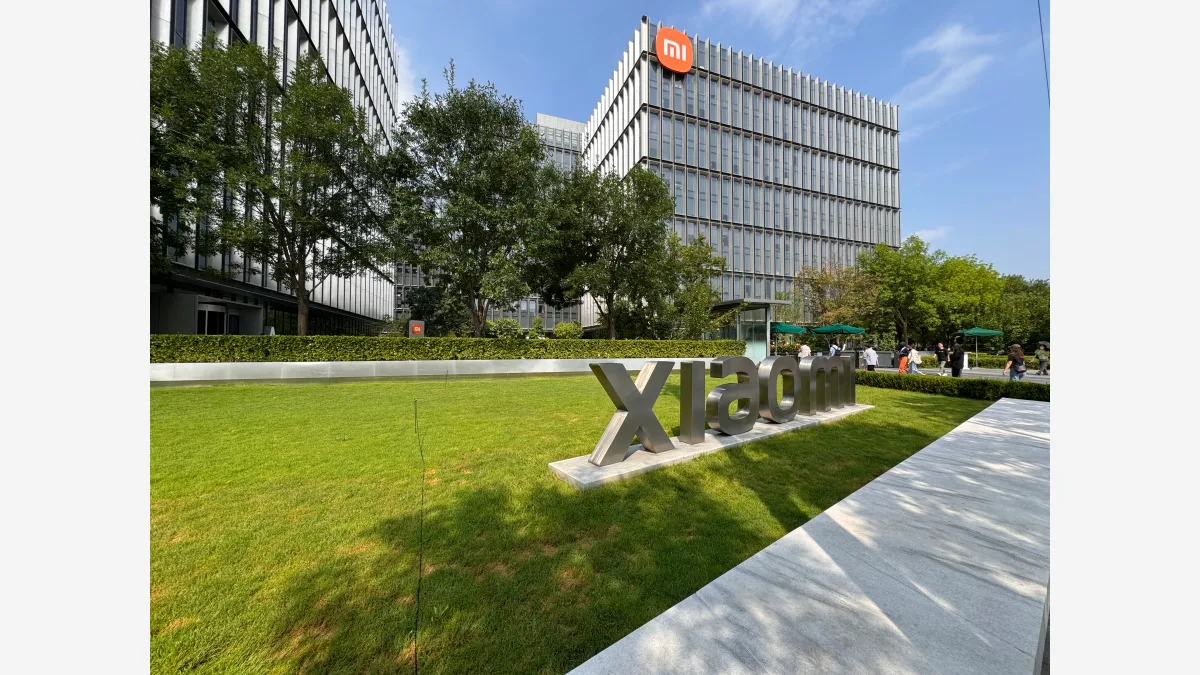
Xiaomi published open weights for MiMo-V2.6-Pro-RL on September 21 under an MIT licence, along with a Flash sibling, a 9B distillation built on Qwen3.5, the technical report, and the reinforcement learning environments and training code behind it. The release puts a 1.02-trillion-parameter mixture-of-experts model — 42 billion of them active per token — into anyone's hands, and the generational jump behind it is more remarkable than the headline placement.
Key takeaways
- MiMo-V2.6-Pro scores 46 on the Artificial Analysis Intelligence Index, the highest of any open-weights model and one point behind GPT-5.6 Sol.
- Its predecessor MiMo-V2.5-Pro scored 19.0 on DeepSWE v1.1 and 1.5 on Terminal Bench 4.0; V2.6-Pro posts 71.9 and 34.9 on the same tests.
- API pricing is unchanged at $0.435 per million input tokens and $0.87 per million output, for both Pro and Flash.
The delta is the story
Open-weight releases usually advertise how close they get to the closed frontier. The more informative column in Xiaomi's own table is the one showing where the model started. On agentic software engineering, V2.5-Pro managed 19.0; V2.6-Pro reaches 71.9. On the hardest terminal benchmark, the older model was effectively non-functional at 1.5 and the new one clears 34.9. On GDPval-AA 2.1, professional-work Elo moves from 1,107 to 1,673.
Xiaomi attributes that to a single design choice it calls "You Only RL Once": rather than running separate reinforcement learning passes per domain, coding, general agent, visual and cybersecurity tasks were mixed into the same batches alongside multiple agent harnesses, on the theory that capabilities reinforce one another and transfer to harnesses never seen during training. The run used fully asynchronous GRPO at 1,568 prompts and 16 rollouts per step.
Where it stands against the closed frontier
| Benchmark | MiMo-V2.6 Pro | MiMo-V2.5 Pro | Claude Opus 5 | GPT-5.6 Sol |
|---|---|---|---|---|
| DeepSWE v1.1 | 71.9 | 19.0 | 74.0 | 73.0 |
| AutomationBench v1.0.6 | 53.1 | 16.0 | 50.3 | 45.8 |
| Terminal Bench 2.1 | 89.9 | 65.2 | 89.1 | 88.8 |
| Terminal Bench 4.0 | 34.9 | 1.5 | 49.0 | 39.9 |
| Agents' Last Exam | 31.6 | 13.2 | 31.6 | 30.8 |
| ProgramBench | 26.5 | 12.5 | 37.0 | 25.0 |
| ExploitBench | 47.9 | 16.6 | 70.0 | 78.5 |
| MiMo VisualCoding | 72.3 | — | 70.0 | 73.4 |
Read across, the model wins the automation and tool-use rows and ties Opus 5 on Agents' Last Exam, then gives ground in two specific places. Competitive programming is one: 26.5 on ProgramBench against Opus 5's 37.0. Offensive security is the other, and the gap there is wide — 47.9 on ExploitBench against 78.5 for Sol.
A twentieth of the cost per task
Xiaomi held API prices flat from the V2.5 generation at $0.435 per million input tokens, with a 99% cache-hit discount, and $0.87 per million output — the same rates for Pro and Flash. OfficeChai's analysis of the Artificial Analysis data puts the model at $0.13 per Intelligence Index task and on the intelligence-versus-cost Pareto frontier, with the index score itself climbing from 26 to 46 in a single generation. Before this release the open-weights top spot was shared by Z.AI's GLM-5.3 and Moonshot's Kimi K3 at 44.
What it is underneath
The architecture is natively omnimodal rather than a text model with adapters bolted on: a 681M-parameter vision encoder and a 308M audio tokenizer feed the same backbone, which runs 70 layers interleaving sliding-window and global attention across 384 routed experts with eight active. Context reaches one million tokens, and a five-layer speculative decoder predicts seven tokens per forward pass. Serving recipes ship for SGLang and vLLM, and the model is also routed through OpenRouter and Xiaomi's own platform.
What to watch
Publishing the RL environments and grader machinery, not just the weights, is the part rival labs will read closely — it is the difference between an artifact and a reproducible method. The near-term question for buyers is whether a self-hostable open-weights model at frontier-adjacent agentic scores changes procurement, a shift already visible in how much gateway traffic open models now carry.
FAQ
Is MiMo-V2.6 open source?
The weights for MiMo-V2.6-Pro-RL and MiMo-V2.6-Flash-RL are published on Hugging Face under an MIT licence, together with the technical report, RL environments and training code. That permits commercial self-hosting and fine-tuning without licence negotiation.
How large is MiMo-V2.6-Pro?
It is a sparse mixture-of-experts model with 1.02 trillion total parameters and 42 billion activated per token, across 384 routed experts with eight active. It handles text, image, video and audio natively and supports a one-million-token context.
Does it beat Claude Opus 5?
Only in places. MiMo-V2.6-Pro leads on AutomationBench v1.0.6 and Terminal Bench 2.1 and ties on Agents' Last Exam, but trails Opus 5 on DeepSWE v1.1, Terminal Bench 4.0, ProgramBench and ExploitBench. All figures are Xiaomi's own published numbers.