
DeepMind's WeatherNext Buys Forecasters a Full Extra Day on Cyclone Warnings
Google DeepMind's WeatherNext gains over a day of cyclone forecast lead time, published in Nature with the models released open source.
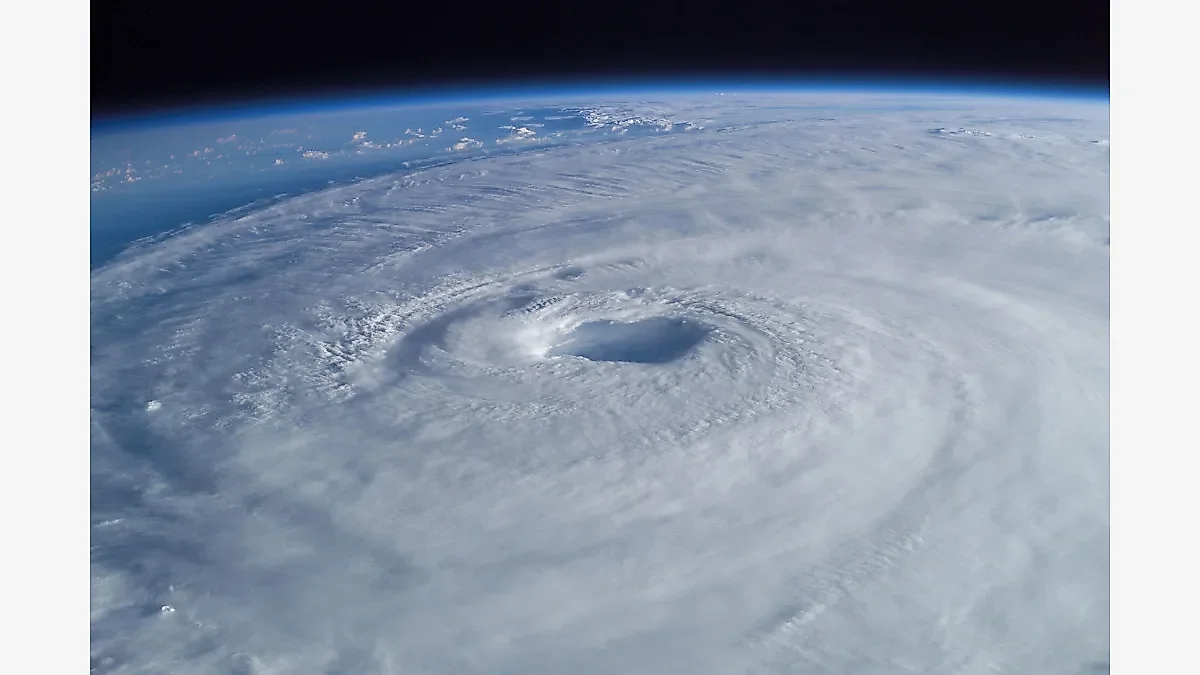
Google DeepMind has published results showing its WeatherNext Cyclones model delivers more than a full day of additional lead time on tropical cyclone forecasts, an advance researchers characterize as equivalent to roughly a decade of conventional meteorological progress. The work appeared in a peer-reviewed Nature paper, and Google is open-sourcing the models alongside it.
The gain is not confined to one aspect of forecasting. WeatherNext improves predictions of a storm's track, its intensity and its wind structure simultaneously, producing ensemble forecasts out to 15 days.
Breaking a Long-Standing Trade-Off
Cyclone forecasting has historically forced meteorologists to choose. Large global models excel at predicting where a storm will go, but their coarse resolution leaves them unable to resolve the small-scale convection that governs how strong it becomes. High-resolution regional models capture intensity far better but lack the global context needed for accurate track prediction. Systems were good at one or the other, rarely both.
WeatherNext addresses this by co-training on two distinct data modalities: global weather dynamics and expert-curated historical cyclone observations. Rather than approximating atmospheric physics at a single fixed scale, the model learns from both the planetary-scale patterns that steer storms and the detailed observational record of how individual cyclones actually behaved.
Evaluated against cyclones from 2023 through 2025, WeatherNext's track, intensity and wind-structure predictions carried an average advantage of a day or more over leading operational models. In practical terms, its three-day forecast matches what previous systems delivered at two days.
Coarse Inputs, Better Answers
One of the more striking technical details is how little resolution the model requires. WeatherNext Cyclones operates on 28-by-28-kilometer inputs, roughly one hundred times coarser than traditional regional models. A compact variant, WeatherNext 2-mini, runs at 111-by-111 kilometers and still performs well.
That efficiency has real operational consequences. Conventional high-resolution forecasting demands substantial supercomputing time, which constrains how many ensemble members can be run and how frequently forecasts can be refreshed. A model producing superior results from coarser inputs opens the door to larger ensembles, faster update cycles and deployment by meteorological agencies without access to top-tier computing infrastructure.
Built With Operational Forecasters
The work was a collaboration between researchers at Google DeepMind and Google Research and operational forecasters at the National Hurricane Center, the Cooperative Institute for Research in the Atmosphere and the UK Met Office. That involvement matters for a system intended to inform real decisions, since operational forecasting imposes constraints on reliability, interpretability and failure behavior that research benchmarks do not capture.
An extra day of warning translates directly into consequences that are difficult to overstate. Evacuation orders, shelter activation, offshore platform shutdowns and utility pre-positioning all run on timelines measured in hours. Twenty-four additional hours of confident forecast is the difference between an orderly evacuation and a rushed one.
Open Weights
Publishing the models openly alongside the Nature paper is a notable choice for a capability with clear commercial potential. It allows national meteorological services to evaluate and deploy the system independently, and lets the wider research community scrutinize results rather than take benchmark claims on trust.
Independent verification will take time, and cyclone forecasting is a domain where a model's behavior on unusual storms matters far more than its average performance. But the combination of peer review, operational collaboration and open weights sets a considerably higher bar for transparency than most AI weather announcements have cleared.
Editor responsible for AI Newsway, operated by ZZEM. Writes about AI, developer tools, cloud and productivity technology.


Comments 0
Comments are currently disabled.