
Go 1.27 Ships Generic Methods, a Rebuilt JSON Engine and Post-Quantum Signatures
Go 1.27 adds generic methods, backs encoding/json with a new v2 engine, cuts small-object allocation cost by up to 30 percent and brings ML-DSA into crypto/tls.
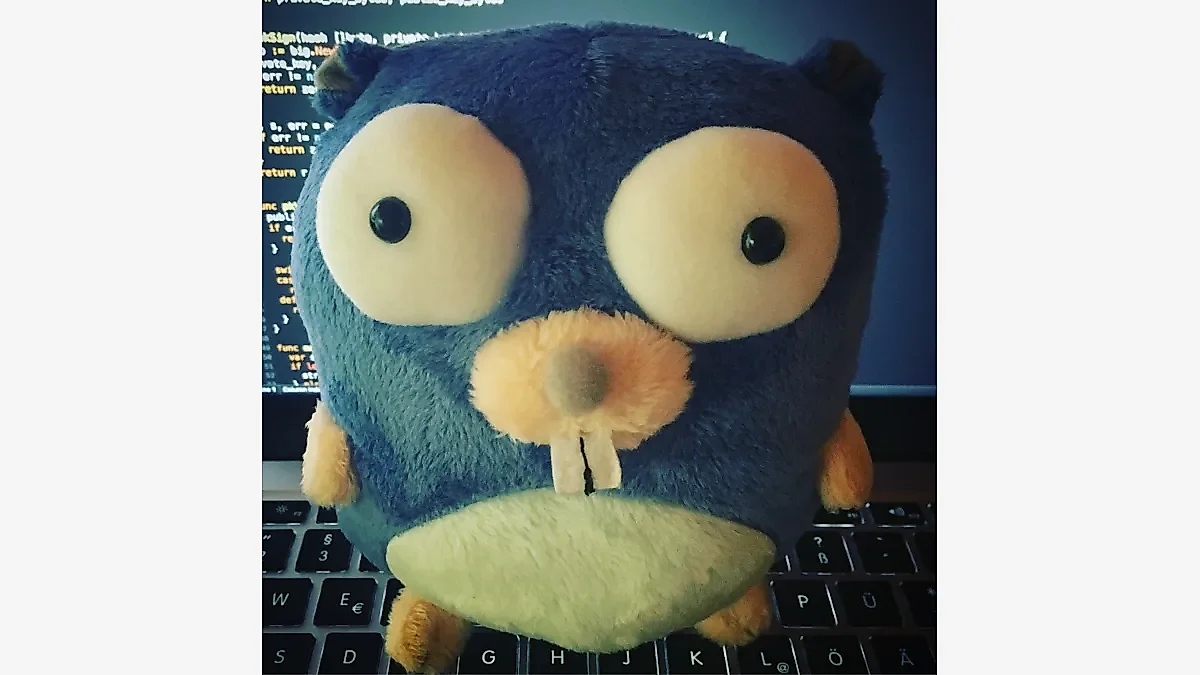
The Go team shipped Go 1.27 this week, and the release finishes several arguments the language has been having with itself since generics landed. Announced by Nicholas Husin on behalf of the team, the version pairs three language changes with a rebuilt JSON implementation, post-quantum signature support and a measurable cut to allocation cost.
Generics Grow Up
The headline language change is generic methods, which remove a long-standing workaround in which library authors added a near-identical method per type. The team illustrates it with math/rand, where a single func (r *Rand) N[Int intType](n Int) Int now covers every integer type that previously required its own entry point.
Two smaller changes compound with it. Struct literal keys may now be any valid field selector for the type, so fields inside nested or embedded structs can be initialized directly rather than through intermediate literals. And function type inference has been generalized to apply in every assignment context, meaning generic functions can be used without explicit type arguments inside composite literals, type conversions and channel sends.
Taken together these are the kind of changes that rarely make release headlines but decide whether a feature feels native. Generics arrived in Go 1.18 with sharp edges around inference and method sets, and much of the community reaction since has been that generic code reads worse than the code it replaces. Closing the inference gaps in assignment contexts is a quiet admission that ergonomics, not capability, was the bottleneck.
JSON, Rebuilt Underneath
The standard library gets encoding/json/v2, a high-level package with configurable options and stricter defaults, alongside encoding/json/jsontext for low-level streaming work. The consequential detail is that the original encoding/json is now backed by the v2 implementation, so existing programs pick up faster unmarshaling without a code change and without a compatibility break.
That migration strategy is worth noting on its own. JSON handling is close to universal in Go services, and a hard v2 cutover would have fractured the ecosystem for years; routing v1 through the new engine lets the performance work reach everyone while the new API earns adoption on its merits.
Cryptography, Runtime and Tooling
A new crypto/mldsa package implements ML-DSA, the post-quantum signature scheme standardized as FIPS 204, and wires it into crypto/tls. For teams tracking harvest-now-decrypt-later exposure, having a standard-library implementation integrated with TLS removes the usual excuse for deferring the work to a third-party dependency.
On the runtime side, small object allocation — anything under 80 bytes — gets up to 30 percent cheaper, which the team measures as roughly a 1 percent overall improvement for allocation-heavy programs. Deadlock detection in runtime/pprof reaches general availability, automatically flagging permanently blocked goroutines. Elsewhere the standard library picks up native UUID generation and parsing, experimental SIMD support through simd/archsimd, and an in-memory fake network suitable for tests.
Toolchain work is modest but practical. Four new vet analyzers arrive — atomictypes, embedlit, slicesbackward and unsafefuncs — go doc gains support for package@version queries, and go mod tidy now consolidates scattered require blocks into a standard direct and indirect layout.
Why This Release Lands Differently
Go has become a default language for AI infrastructure and agent runtimes, where allocation churn under high concurrency and JSON serialization across tool calls are the two costs that show up first in a profile. A release that reduces both while adding post-quantum signatures reads less like routine maintenance and more like the language positioning itself for the workloads it is increasingly asked to carry.
The Go team says follow-up blog posts covering individual topics in more depth will appear over the coming weeks, and full details are in the Go 1.27 release notes. Binary archives and installers are available now on the project download page.
Editor responsible for AI Newsway, operated by ZZEM. Writes about AI, developer tools, cloud and productivity technology.

Comments 0
Comments are currently disabled.