
Micron's $54B Quarter Comes With a Warning: Memory Gets Tighter Through 2028
Micron's fiscal Q4 revenue hit $54.23 billion at an 87% gross margin, yet the CEO says memory supply will trail demand through 2027 and 2028.
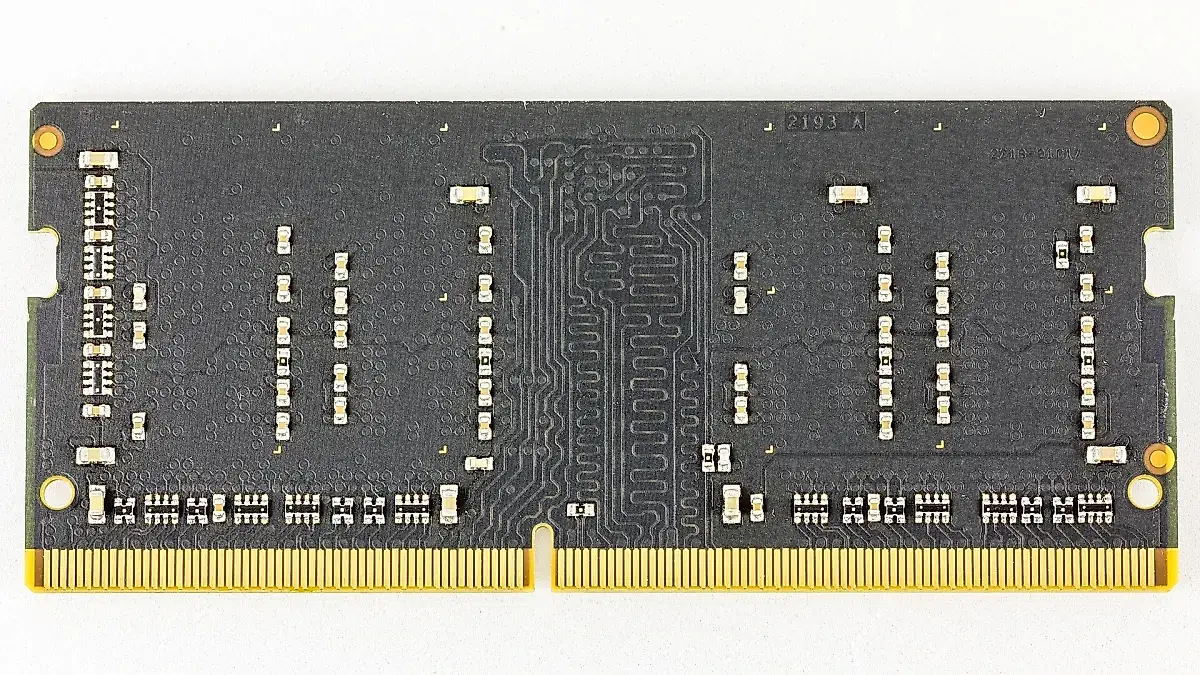
Micron Technology told investors on September 30 that the memory shortage squeezing AI data centers will persist into 2028 and perhaps beyond, even as the company reported fiscal fourth-quarter revenue of $54.23 billion — nearly five times the $11.32 billion it booked a year earlier. Chair and chief executive Sanjay Mehrotra said Micron has already sold most of the memory it will produce next year, and that customers should expect to pay “much higher prices” than they did in 2026.
Key takeaways
- Micron's Q4 FY2026 revenue of $54.23 billion beat the $51.07 billion LSEG consensus, with non-GAAP earnings of $33.42 per share against $31.61 expected.
- Non-GAAP gross margin reached 87.0% for the quarter, and full-year revenue climbed to $133.19 billion from $37.38 billion in fiscal 2025.
- Mehrotra said Micron has no line of sight to when memory supply and demand will rebalance, and expects tighter conditions in calendar 2027 and 2028 than in 2026.
What Micron actually reported
The quarter closed on September 3. According to Micron's earnings release filed with the SEC, GAAP net income came in at $37.70 billion, or $32.87 per diluted share, up from $3.2 billion and $2.83 per share in the same quarter last year. Operating cash flow for the three months alone was $43.97 billion.
The full year is the more striking number. Revenue of $133.19 billion was up roughly 256% year over year, GAAP net income reached $84.97 billion, and operating cash flow totalled $89.68 billion against net capital expenditures of $27.37 billion. DRAM alone accounted for $39.8 billion of fourth-quarter sales — a 343% jump, and 73% of the total, CNBC reported.
Why the squeeze is widening instead of easing
Mehrotra was unusually direct about the supply picture on the earnings call, as The Register noted.
In calendar 2027 as well as 2028, we see demand exceeding supply. In fact, we see greater tightness in the industry in 2027 and in 2028 versus 2026. We do not have line of sight to when supply and demand will return to balance.
Micron plans to bring new fabs online in 2028, backed by roughly $25 billion of capital spending in the first half of its new fiscal year. Executives cautioned that those plants will not immediately improve availability or soften pricing. Demand for high-bandwidth memory, the stacked DRAM bolted next to AI accelerators, is growing faster than demand for the conventional server DRAM that still carries higher margins for the company.
Where the margin is coming from
Segment figures show how sharply the mix has shifted toward AI. Core Data Center contributed $18.00 billion in the quarter and Cloud Memory $16.28 billion, together outweighing Mobile and Client at $13.11 billion and Automotive and Embedded at $6.82 billion. The Register reported that the Core Data Center unit posted a 90% gross margin for the quarter against 41% a year ago, while Cloud Memory went from 59% to 83%. Data center SSD sales approached $10 billion for the quarter, growth of more than 1,000%.
What this means for AI infrastructure budgets
Memory has stopped being a rounding error in GPU cloud build costs. Mehrotra said Micron is working with Nvidia on the industry's first custom HBM4E implementation, branded NV-HBM, destined for next-generation GPUs and NVLink fusion platforms. On the NAND side, he pointed to AI context memory used for KV cache offload during inference as an expanding market for SSDs that also displaces hard drives.
The spillover is already visible outside the data center, where higher memory costs have pushed up prices on consumer devices including Apple iPads and MacBooks.
Outlook
For the first quarter of fiscal 2027, Micron guided to revenue of $61.5 billion give or take $1.5 billion, non-GAAP gross margin near 86.25%, and non-GAAP earnings of $38.15 per share plus or minus a dollar — comfortably above the $35.40 on $57 billion that LSEG-polled analysts had modelled. The company is spending $250 billion on two new HBM campuses, with ground broken in Clay, New York, in January and a first new Boise fab due online next year.
Investors barely blinked. Micron's market capitalisation has passed $1.2 trillion and the stock is up more than 500% over the past year; shares spiked after the release, then drifted back toward the closing price, suggesting the scale of the beat was already priced in. The same demand curve is driving the financing scramble behind AI capacity, as in Nvidia's effort to mobilise $500 billion for AI factories.
FAQ
Is Micron the only company that makes HBM?
No. SK Hynix and Samsung also produce high-bandwidth memory and are building out capacity in South Korea. Micron is the only US-based HBM maker, and it holds the smallest share of the three, which is part of why its sold-out position carries weight for buyers.
How long will memory prices stay elevated?
Micron is not forecasting a peak. Mehrotra said demand will exceed supply through calendar 2027 and 2028, with tightness greater in both years than in 2026, and that the company cannot see when the market rebalances. New fabs arriving in 2028 are not expected to deliver immediate relief.
Why is HBM less profitable than regular DRAM for Micron?
HBM is harder to manufacture and yields less per wafer than conventional DRAM, so its gross margin currently trails the DRAM business even though volumes are growing faster. Micron says it is working to expand HBM margins as newer generations ramp.
Editor responsible for AI Newsway, operated by ZZEM. Writes about AI, developer tools, cloud and productivity technology.



Comments 0
Comments are currently disabled.