
OpenAI's Ultrafast Mode Runs GPT-5.6 Sol 14x Faster on Cerebras Silicon
OpenAI's new Ultrafast tier runs GPT-5.6 Sol at up to 750 tokens per second, 14x standard speed, powered by Cerebras wafer-scale chips in limited preview.

OpenAI has begun previewing Ultrafast, a new service tier that runs GPT-5.6 Sol at up to 14 times the speed of standard processing. The mode delivers as many as 750 output tokens per second, and it runs on silicon from Cerebras rather than the GPU infrastructure that serves most of OpenAI's traffic.
The pitch is aimed squarely at enterprise buyers. OpenAI framed the release around a tradeoff developers have long accepted: getting real-time responsiveness usually meant dropping down to a smaller or more specialized model. Ultrafast keeps the full GPT-5.6 Sol model intact and accelerates it instead.
Same Model, Different Silicon
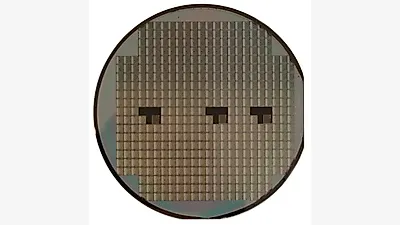
The speedup comes from Cerebras' Wafer-Scale Engine, a processor built on an entire silicon wafer rather than a conventional chip die. Each wafer carries 44 GB of on-chip SRAM, which lets model weights stay resident on the processor instead of shuttling to and from external memory. Tokens then flow through model layers pipelined across multiple wafers.
That architecture attacks the memory bandwidth bottleneck that limits token generation on GPU clusters. Cerebras says the accelerated configuration runs the same intelligence as GPT-5.6 Sol on standard processing, and reports a 5.6x speedup on GDP-Val benchmarks with no measured quality loss.
Where the Speed Matters
OpenAI points to workflows where latency carries real cost: incident response, customer service and support, financial market analysis, and e-commerce. In each case, the value is less about raw throughput than about keeping a frontier-class model inside a human-acceptable response window.
The company summarized the shift as progress toward more useful work per second, a framing that treats latency as a capability rather than an implementation detail. For agentic systems that chain dozens of model calls, a 14x reduction in per-call latency compounds across the entire run.
Speed has quietly become a competitive axis of its own over the past year. As frontier models converged on similar capability levels, latency and cost emerged as the differentiators enterprises actually weigh during procurement. A model that answers in two seconds rather than thirty changes which products can be built on top of it at all.
Competitive Positioning
Rival labs have shipped their own accelerated tiers. Anthropic offers a fast mode for Claude, though Cerebras claims Ultrafast runs roughly 5 times faster than Claude Opus 4.8 Fast and 11 times faster than Fable 5.
The arrangement also marks a notable expansion for Cerebras, which has spent years arguing that wafer-scale hardware is better suited to inference than repurposed graphics processors. Serving a flagship OpenAI model is the most visible validation that argument has received.
Limited Access for Now
Ultrafast is launching in the OpenAI API as a limited preview available only to a small group of customers. OpenAI says access will widen as capacity grows, which is the operative constraint, since wafer-scale systems are difficult to manufacture and deploy at volume.
That gating leaves the most important question open. Neither company has detailed pricing for the tier, and cost per token will determine whether Ultrafast becomes a default for latency-sensitive production workloads or stays a specialty option for a handful of enterprises. Until pricing lands and capacity expands, the preview mostly serves as a demonstration that frontier-scale models and real-time speed are no longer mutually exclusive.
Editor responsible for AI Newsway, operated by ZZEM. Writes about AI, developer tools, cloud and productivity technology.

Comments 0
Comments are currently disabled.