The most consequential AI failure yet disclosed inside the US military was not a rogue system. It was a formatting step. A special operations analyst asked a chatbot a question, got a wrong answer, and then asked AI to turn that answer into an official-looking intelligence product. CNN reported on Friday, citing four sources, that the resulting document set an armed interception of a Chinese vessel in motion this spring before officials caught the error.
Key takeaways
- A special operations command analyst queried a chatbot to fuse open-source material with classified signals intelligence, and the model reached a false conclusion about a Chinese vessel's cargo.
- The same analyst then used AI a second time to format the finding into a standard intelligence product, which circulated across command channels unchallenged.
- CNN's sources said the incident was not isolated, and that no single standard governs how AI-generated intelligence is verified across the US military.
Why the second AI query mattered more than the first
Hallucination is the part of this story everyone will focus on. It is the less interesting half. Models invent things constantly, and analysts who work with them expect to discard output.
What removed that expectation here was packaging. Once the claim was rendered into the standard report format, it stopped looking like a chatbot answer. It looked like finished intelligence. Every downstream reader in the chain of command received a document whose form implied a sourcing process that had never happened.
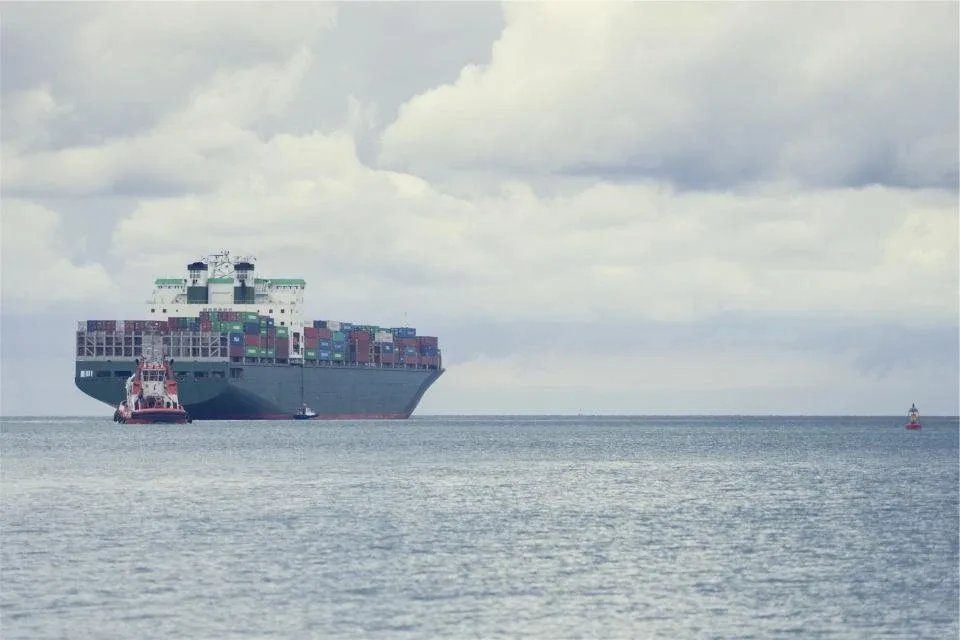
The original manifest reporting came from US Special Operations Command Pacific in Hawaii. The chatbot combined it with secret signals intelligence and concluded the ship carried nuclear weapons components. One of CNN's sources called the report entirely false, and said it almost started a war.
How close it got
Timing made the error unusually dangerous. The report landed during the war with Iran. Appetite for delay was minimal.
Armed personnel were readying to board. Aircraft were airborne. Only a late review of the underlying sourcing stopped the operation. CNN could not determine what the cargo actually was, and said neither the Pentagon nor Special Operations Command Pacific answered requests for comment.
A US move against a Chinese-flagged vessel carries escalation risk that has little to do with the cargo. That is why a single bad paragraph could plausibly have produced a shooting incident between two nuclear powers.
The verification gap nobody owns
Officials described the rollout as decentralized. Commands pick their own tools. They operate under their own orders and their own safety standards. No common rule tells anyone how to verify what a model produced.
A former senior official familiar with these systems offered CNN a blunt assessment: the government's internal tools are largely commercial products wearing lipstick. That framing cuts against the assumption that a classified deployment is inherently more reliable than a consumer chatbot.
The mechanics explain the rest. A large language model produces fluent, well-structured text regardless of whether the claim inside it is grounded. A hallucination carries no visual tell. Confidence in the prose is not evidence about the world. One source compressed the whole dynamic into six words: AI lets you get to a bad idea faster.
The policy backdrop
Speed is the stated goal, not an accident. Defense Secretary Pete Hegseth released an Artificial Intelligence Acceleration Strategy in January, promising to unleash experimentation and eliminate bureaucratic barriers. The accompanying memo set out to democratize AI across the department, putting models in the hands of three million civilian and military personnel at all classification levels.
Those models are commercial. The Pentagon's Chief Digital and Artificial Intelligence Office has issued prototype agreements worth up to $200 million each to Anthropic, OpenAI, Google and xAI. That relationship is not frictionless — a federal judge recently voided a Pentagon supply-chain risk label applied to Anthropic. Meanwhile, sources said AI use in targeting keeps expanding, with no real guidance on how a human in the loop is supposed to prevent civilian casualties or fratricide.
Outlook
Jake Steckler, a GovAI research scholar and former US Army officer, told TechCrunch that service members need to understand the uncertainty these systems carry, and that the point is sharpest for any decision that could lead to use of force. He does not read the episode as an argument for abstention. His warning runs the other way: chasing adoption speed above all else will generate incidents that destroy trust, and distrust slows adoption more than caution ever would.
The cheapest available fix is procedural rather than technical. If AI-assisted findings were labeled as such through the chain of command, a reviewer would at least know which claims to re-derive.
FAQ
Which AI chatbot produced the false report?
CNN reported that it was not clear whether the tool was a commercially available chatbot or a US government product. A former senior official said internal government tools are largely repackaged commercial models, which makes the distinction less meaningful in practice.
Was anyone harmed in the incident?
No. The planned interception was aborted before US personnel boarded the vessel, after officials examined the report's sourcing and found it had been generated with AI assistance. Any operation against a Chinese ship could have risked escalating into an armed confrontation between the two countries.
Is this the first case of AI hallucination in US intelligence work?
According to one of CNN's sources, it is not. Similar hallucinations have surfaced across the intelligence community since these tools began proliferating, though this is the first publicly reported case to reach the point of operational execution.