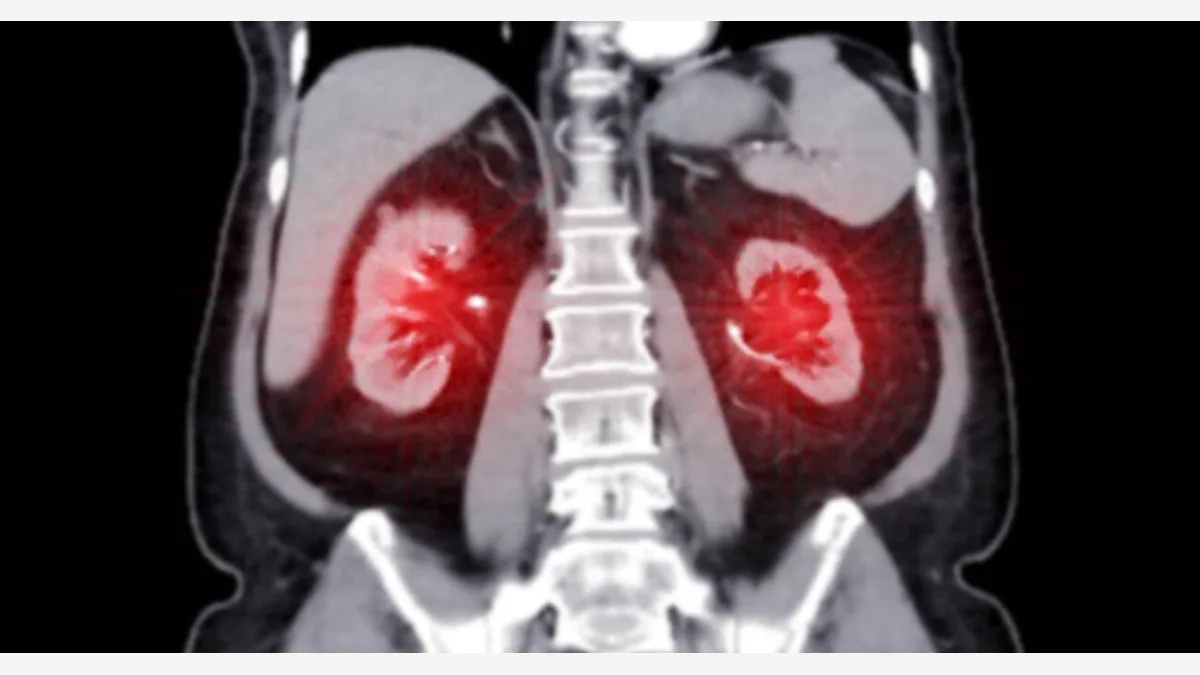
Alibaba's research arm has released RADAR, a vision-language model that reads contrast-enhanced abdominal CT scans and reports 146 distinct clinical findings, publishing both the weights and the study behind them. The paper appeared in Science on 17 September, with the model reaching a mean area under the curve of 0.913 across those findings.
The release is notable less for the headline accuracy than for its shape: a generalist reader trained without hand-drawn annotations, benchmarked against practising radiologists, and then handed out for free.
Key takeaways
- RADAR trained on 424,911 contrast-enhanced abdominal CT examinations and roughly 15 million anatomy-level image-text pairs, learning from clinical reports rather than manual labels.
- It averaged 0.913 AUC over 146 findings, held 0.895 across eight external validation centres, and scored 0.904 on more than 27,000 emergency cases it was never specifically trained for.
- The best competing vision-language model in the same evaluation managed 0.776 AUC, and radiologists working with RADAR gained about 10 percent in detection sensitivity.
How a model learns 146 findings without labels
Conventional medical imaging models are narrow by design. One is trained to spot pancreatic lesions, another to flag liver abnormalities, and each requires radiologists to draw boundaries around the thing it must learn. That annotation bottleneck is the reason the field has accumulated many single-disease tools and few general ones.
RADAR takes the opposite route. Built by DAMO Academy with the First Affiliated Hospital of Zhejiang University School of Medicine and Hupan Laboratory, it pairs CT volumes with the clinical reports radiologists already wrote, treating the report text as supervision. That makes the training corpus a byproduct of routine hospital work rather than a separate labelling project, which is how the team reached 424,911 examinations.
The model covers 18 abdominal organs and, through them, several hundred potential diseases, from malignant tumours down to incidental abnormalities. The team describes it as the first expert-level generalist model for medical imaging, and says the same training recipe should transfer to other imaging modalities.
What the numbers survive
A single internal accuracy figure is easy to inflate, so the evaluation matters more than the headline. Across eight external centres the mean AUC fell only to 0.895, and in an emergency-department cohort of more than 27,000 cases — a setting with different case mixes and no dedicated training — it held 0.904. The strongest rival multimodal model in the comparison reached 0.776.
The reader study is the more practical result. In a group of 26 radiologists drawn from several hospitals, the model outperformed 23 of them on average. When the same clinicians worked with RADAR alongside them, disease-detection sensitivity rose by roughly 10 percent and reading time fell by about 30 percent — a throughput argument as much as an accuracy one.
Why open weights change the calculus here
Medical AI has been dominated by regulated, closed products sold per-seat or per-scan. Publishing the model, code and framework openly shifts that: hospitals outside the original cohort can validate it against their own populations before trusting it, and researchers can probe its failure modes directly rather than inferring them from a vendor datasheet.
It also lands in a competitive context. Alibaba has been pushing openly downloadable models across domains, from the Qwen language family to this medical release, treating open weights as distribution strategy rather than charity.
What comes next
Publication and deployment are different problems. A model validated on largely Chinese cohorts still needs testing on other populations and scanner fleets, and no regulator anywhere treats a Science paper as clearance. The realistic near-term use is as a second reader that flags findings a radiologist then confirms — which is exactly the configuration the reader study measured.
FAQ
Is RADAR actually open source?
The team has released the model, code and technical framework publicly alongside the Science paper. As with other open-weight releases, that permits local deployment and independent validation, though clinical use remains subject to whatever regulatory approval applies in a given country.
Does RADAR outperform human radiologists?
In the published reader study it beat 23 of 26 participating radiologists on average across the evaluated findings. The more useful result is the assisted condition: radiologists working with the model gained roughly 10 percent in detection sensitivity and read cases about 30 percent faster.
What kind of scans does it need?
RADAR is built for contrast-enhanced abdominal CT covering 18 organs. The researchers say the training approach — supervising from existing clinical reports instead of manual annotations — should extend to other imaging types, but the released model is scoped to abdominal CT.