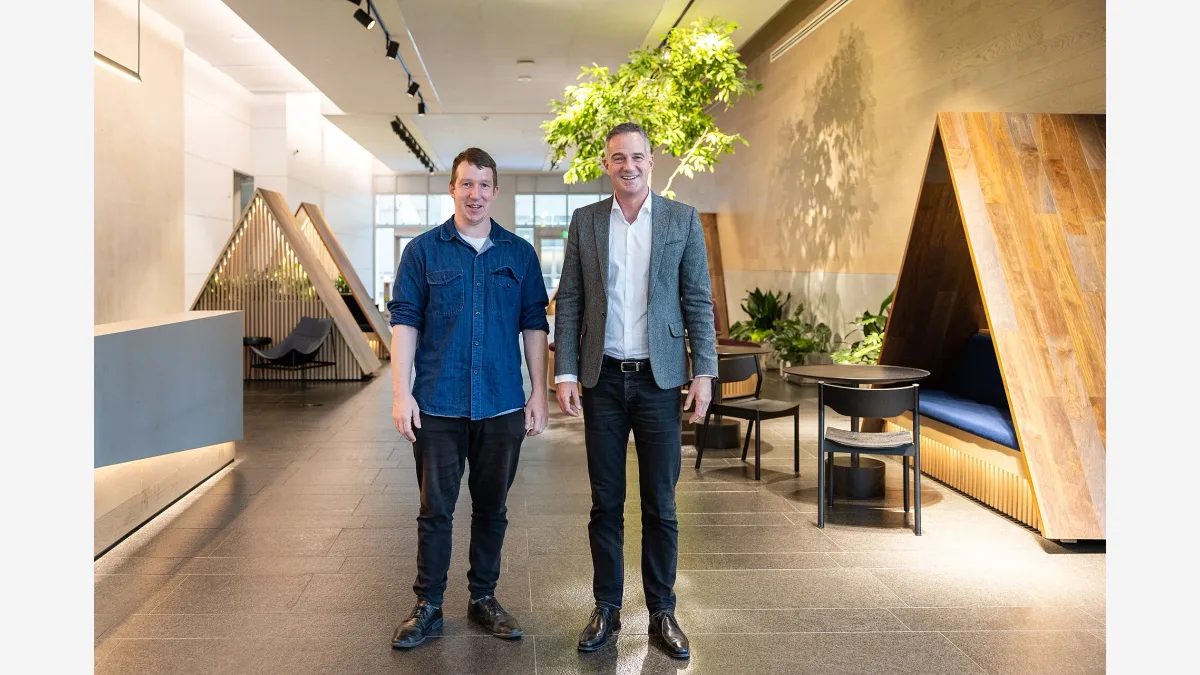
Inherent, a London AI lab founded by Google DeepMind alumni, has released an agent called Faraday that it says outperformed considerably larger systems from Anthropic and OpenAI at a narrow but demanding task: reproducing the findings of published scientific papers without being handed the answer first.
The claim arrives only weeks after the startup left stealth with a $50 million seed round. Faraday was measured against Anthropic's Claude Opus 4.8 and OpenAI's GPT-5.5, both frontier-scale systems, while running on Qwen 3.6 — a model of roughly 27 billion parameters, a small fraction of what its rivals carry.
The Method Mattered More Than the Score
Cofounder and chief scientist Edward Hughes told TechCrunch that the headline comparison was not the point. What interested the team, he said, was how they got there rather than the fact of beating other frontier agents.
Paper replication is not a party trick as far as Inherent is concerned. Hughes noted that many PhD students begin their training precisely this way, working through published results before attempting original work. The company's stated ambition is larger — agents that discover new scientific knowledge rather than verify old findings — and replication is treated as a stepping stone toward it.
Inherent also set a bar above raw accuracy. Beyond reproducing results, it wanted Faraday to show what the team calls research taste: an instinct for which experiments are worth running and how to design them well. Teaching something that intangible is where reinforcement learning enters. Rather than training agents primarily on formal accounts of how science is conducted, Inherent leans on reward-based training, betting it generalises better across scientific fields.
Deliberately Not Building Everything
That focus has shaped what the company declines to build. Instead of developing its own coding tool, Inherent had Faraday use OpenAI's GPT-5.5 Codex — the same way, the company argues, that human scientists lean on existing software rather than reinventing every instrument.
The team is also trying to avoid agents that simply agree with their users. Hughes described the goal as modelling his favourite kind of colleague, the one who returns unprompted with results and asks what you make of them.
A London Bet
Inherent's dozen employees all work in person from an office in King's Cross, the neighbourhood that Google DeepMind's presence helped turn into a global AI hub. Hughes said London is the place to be, and is bullish on the city's density of AI talent.
He has been less enthusiastic about one local practice. Hughes has added his voice to calls to end garden leave — the UK convention of barring departing employees from joining or founding a rival for months after they resign — describing himself as personally affected by it and framing the view as his own rather than the company's. American researchers generally face no equivalent restriction, which hands US startups a head start on hiring.
Hughes eventually worked around the constraint and founded Inherent with two other DeepMind alumni and a fourth cofounder. The startup plans to reach roughly 20 to 25 staff by the end of the year, with ambitions in world models as well. With some DeepMind employees reportedly unsettled by Demis Hassabis's new role, a hiring push from a nearby lab founded by former colleagues may find a receptive audience.