
Nvidia Rubin HPC GPU Tops 50,000 CUDA Cores
Nvidia unveiled Rubin HPC at SC26 in Chicago on Nov. 16, 2026, a Vera Rubin-family GPU for scientific simulation with more than 50,000 CUDA cores, sparse data acceleration and seventh-generation NVLink. It is expected in 2028. Nvidia also released new CUDA-X science libraries and a four-node DGX Spark HPC Developer Kit.
Nvidia on Nov. 16, 2026, unveiled Rubin HPC, a new data center GPU built for scientific simulation, at the SC26 supercomputing conference in Chicago. The company says the chip carries more than 50,000 CUDA cores, the most it has ever put on a single GPU, but it will not be available until 2028.
Key takeaways
- Rubin HPC joins the Vera Rubin platform with more than 50,000 CUDA cores, a sparse data acceleration feature and seventh-generation NVLink.
- Nvidia expects the GPU to be available in 2028 and has not disclosed memory capacity, bandwidth or FP64 throughput.
- Alongside it, Nvidia released new CUDA-X science libraries and a four-node DGX Spark HPC Developer Kit that researchers can buy now.
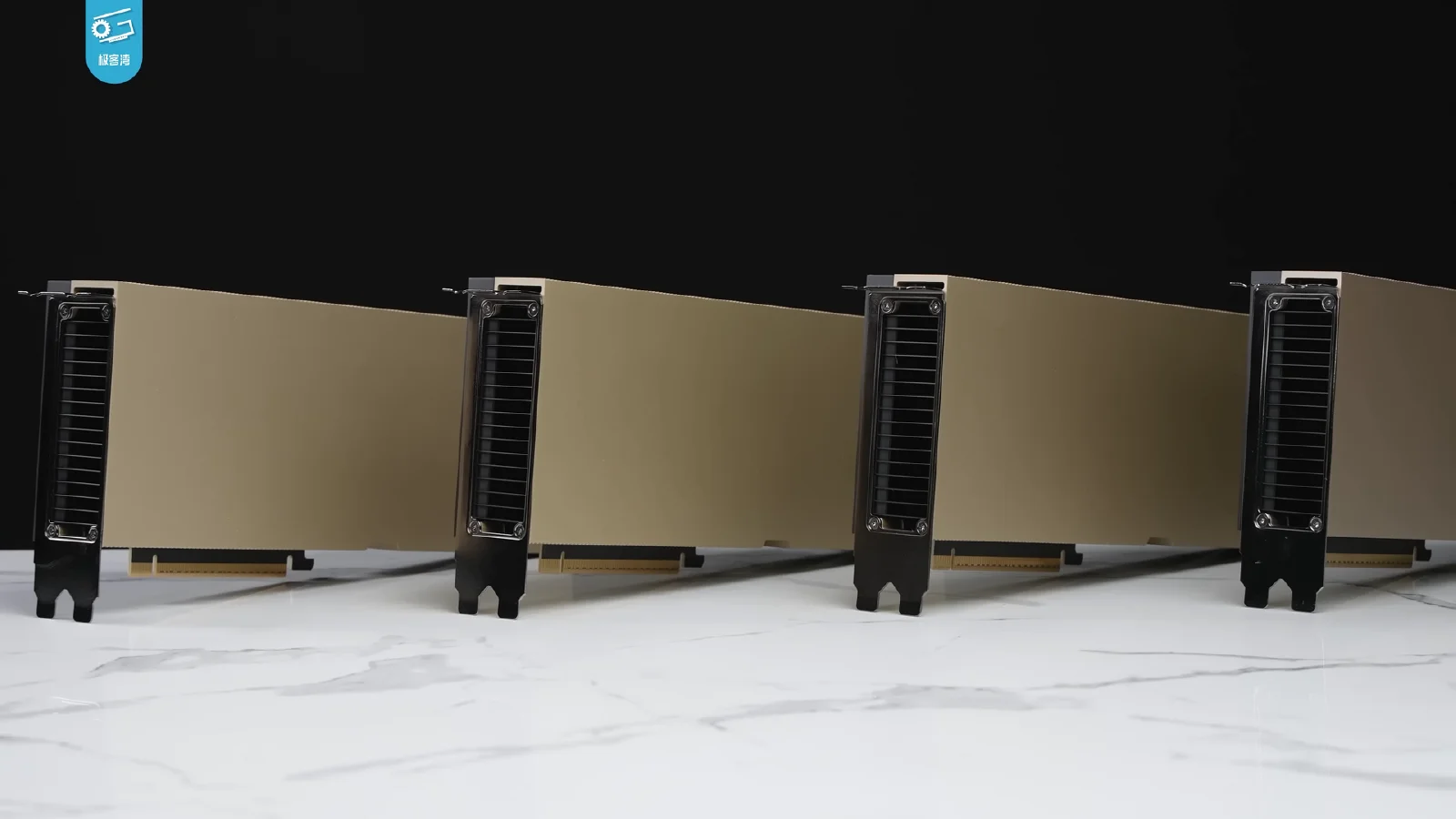
What is Nvidia Rubin HPC?
According to Nvidia's announcement, Rubin HPC is a member of the Vera Rubin family aimed at simulation and data processing in science, engineering and analytics rather than large language model training. For comparison, SiliconANGLE reported that Nvidia's flagship Rubin GPU has a little over 28,000 CUDA cores and 898 Tensor cores.
Nvidia describes the design as "balanced," scaling data movement together with compute. A sparse data acceleration feature is meant to keep cores supplied with scattered values, which dominate workloads such as sparse matrix operations, stencil computations, sorting and reductions. Seventh-generation NVLink links the GPUs together.
Tom's Hardware noted that Nvidia did not say how much high-bandwidth memory the chip has, or whether it shifts resources toward the double-precision FP64 math that AMD and Intel are emphasizing in their own GPUs at the show.
Why Nvidia ties the chip to AI agents
Nvidia pitches Rubin HPC as hardware for AI agents that propose candidate materials, molecules or designs and then call simulations to test them. "For agents tackling science and engineering, faster simulation means faster discovery," said Ian Buck, Nvidia's vice president of hyperscale and high-performance computing.
New CUDA-X libraries ship now
Researchers do not have to wait for 2028 to try parts of the stack. In a separate post, Nvidia said its cuPhoton.xBeam module cut Event Horizon Telescope correlation work that once took over a month to eight minutes. It also reported up to 3x faster molecular simulation with cuPotential, up to 22x faster and up to 75% cheaper VASP calculations with Daviator, a 900x speedup over CPUs for the newly open-sourced cuSpa at Memorial Sloan Kettering Cancer Center, and up to 84x faster protein annotation with a GPU version of HMMER at Basecamp Research. All of these figures are Nvidia's.
A supercomputing lab on a desk
Nvidia also introduced the DGX Spark HPC Developer Kit, four DGX Spark systems wired in a ring over ConnectX-7 without a network switch. The kit offers 512 GB of combined memory and 20 TB of NVMe storage, and Nvidia says it can run models of up to 700 billion parameters in NVFP4. It is on sale now; an HPC SDK installation playbook is "coming soon."
Context
The announcement lands as hyperscalers place GPU orders in the millions, as seen in Amazon's two-million-GPU Nvidia commitment. Rubin HPC signals that Nvidia is splitting its line between AI training parts and chips tuned for traditional simulation. SC26 runs Nov. 15–20 at McCormick Place.
What's next
With shipments two years out, the key open questions are memory, FP64 performance and price. Independent benchmarks from national labs and research centers will decide whether more cores and sparse acceleration translate into faster science.
FAQ
When can I buy Rubin HPC? Nvidia says it is expected to be available in 2028.
How is it different from the main Rubin GPU? It roughly doubles the CUDA core count reported for flagship Rubin and adds sparse data acceleration for simulation workloads.
What can researchers use today? The new CUDA-X libraries and the four-node DGX Spark HPC Developer Kit, which Nvidia says is available for sale.
References
- NVIDIA Announces Rubin HPC — A New GPU to Accelerate Agents for Science, Engineering and Analytics — NVIDIA Blog (Nov. 16, 2026)
- NVIDIA CUDA-X Libraries Give Agents the Tools to Accelerate Scientific Discovery — NVIDIA Blog (Nov. 16, 2026)
- NVIDIA DGX Spark Developer Kit Turns a Desk Into a Supercomputing Lab — NVIDIA Blog (Nov. 16, 2026)
- Nvidia debuts new Rubin HPC chip, scientific research libraries — SiliconANGLE (Nov. 16, 2026)
- Nvidia announces Rubin HPC GPU with 'record number of CUDA cores' at Supercomputing 2026 — Tom's Hardware (Nov. 16, 2026)
Editor responsible for AI Newsway. Writes about AI, developer tools, cloud and productivity technology.


Comments 0
Comments are currently disabled.