
OpenAI's Astra Cracked 10 Open Math Problems. The Compute Bill Was $2,000.
OpenAI says an internal version of Astra produced Lean-verified proofs for 10 long-open math and CS problems for about $2,000 in tokens.
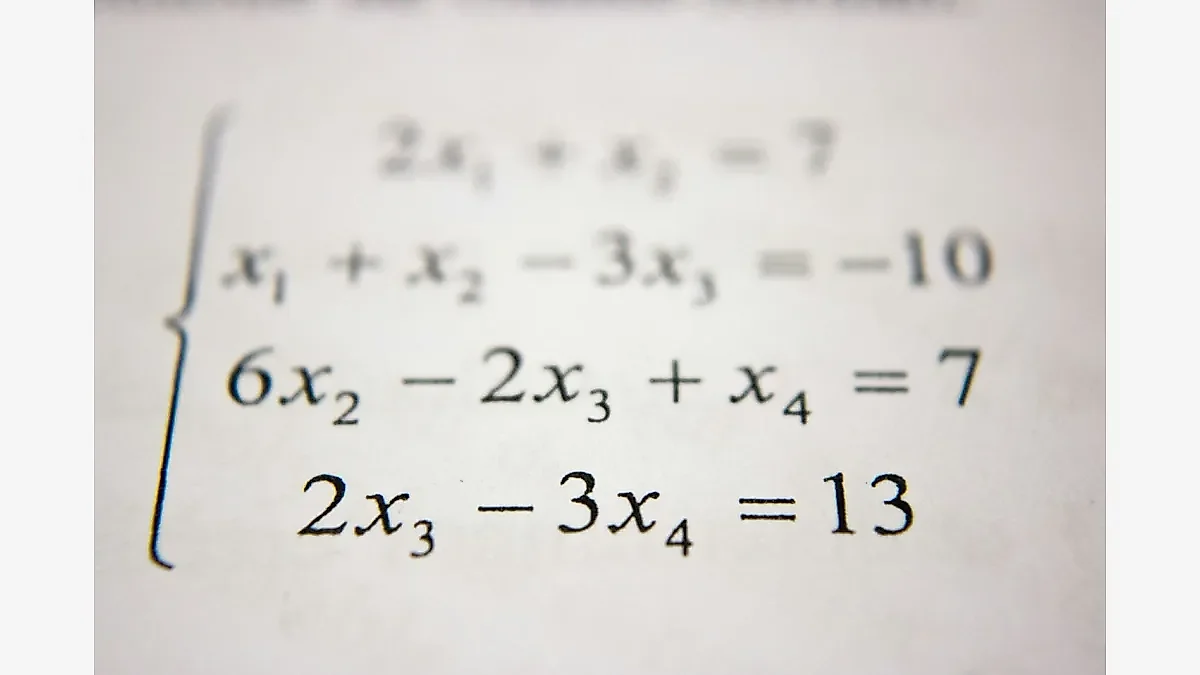
OpenAI has published ten new results in mathematics and theoretical computer science produced by an internal version of Astra, the model it describes as its next frontier system. Every argument was checked with the Lean proof assistant, and the entire run consumed roughly $2,000 worth of API tokens.
The cost figure is doing most of the work in the coverage. Each of the ten problems had resisted meaningful progress for at least a decade, and several had been open far longer. That a machine produced formally verified arguments for all of them at a price comparable to a mid-range laptop is the part practitioners have fixated on.
What Astra Actually Produced
The published list spans several distinct areas rather than clustering in one convenient corner of the field. It includes a claimed counterexample to Connes's rigidity conjecture on group von Neumann algebras and a construction establishing the existence of non-sofic groups, both long-standing questions in operator algebras and geometric group theory.
On the combinatorics and coding theory side, the results tighten asymptotic upper bounds for high-dimensional sphere packing down to the Cohn-Elkies threshold and deliver exponentially stronger bounds for binary and spherical codes. In complexity theory, Astra produced an n⁴/log n formula lower bound for the permanent, alongside a superexponential lower bound for multicolor Ramsey numbers that resolves Erdős problem 183.
OpenAI released the full set on August 1, 2026. Human researchers handled the paper writing; the model supplied the arguments.
Lean Is the Reason This Is Different
Claims that a language model has solved a hard mathematical problem have circulated for years, and most have collapsed under inspection. Models are fluent enough to produce proofs that read correctly while hiding a fatal step in the middle, and reviewing them consumes exactly the expert attention that automation was supposed to save.
Formal verification changes that calculus. Lean will not accept an argument with a gap, so a proof that compiles has been mechanically checked against its stated assumptions. The remaining question is not whether the logic holds but whether the formalized statement matches the mathematical claim people care about, a narrower and more tractable review problem.
That caveat still matters. OpenAI has said the work requires further review by human mathematicians, and formalization choices can quietly weaken a theorem in ways that only a specialist will notice.
The Economics Are the Real Story
Frontier-model announcements are usually framed around capability. This one is more interesting as a pricing event. Ten decade-old open problems for $2,000 implies a marginal cost per result of roughly $200 in inference, against research programs that historically absorb years of a specialist's time.
Nothing about that guarantees the same cost curve applies to arbitrary problems. OpenAI selected which results to publish, and there is no public accounting of how many attempts failed, how much was spent on unsuccessful directions, or how much human steering shaped the search. A $2,000 headline covering only the successful runs is not the same as a $2,000 research budget.
Still, the direction is unambiguous. If verified mathematical output can be purchased at these prices, the bottleneck in parts of pure mathematics shifts from generating candidate arguments to deciding which questions are worth asking and reviewing what comes back. Astra has not been released as a product, and OpenAI has not said when a version will reach customers.
Editor responsible for AI Newsway, operated by ZZEM. Writes about AI, developer tools, cloud and productivity technology.

Comments 0
Comments are currently disabled.