
An Unreleased Anthropic Model Pushed a 150-Year-Old Math Bound From 41.6% to 67.2%
An unreleased Claude model raised the proven Riemann zeta lower bound from 41.6% to 67.2%, using 60 subagents and 31 million output tokens.
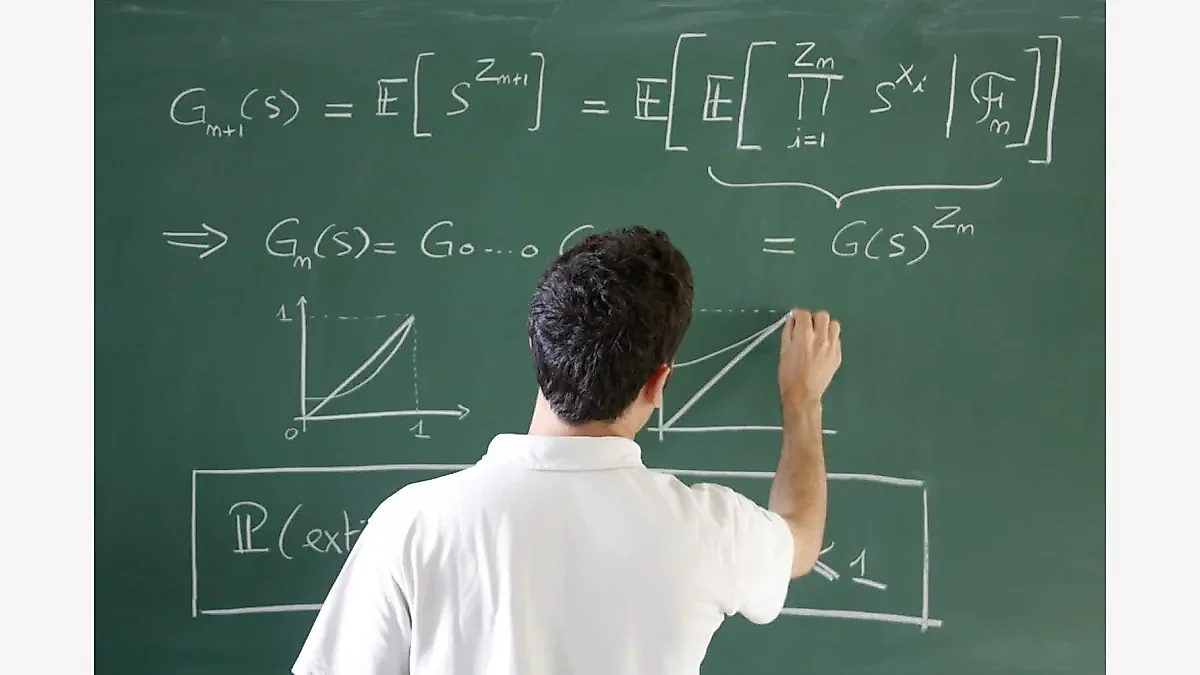
Anthropic disclosed that an unreleased research version of Claude made substantial progress on the Riemann hypothesis, raising the proven lower bound for the proportion of zeta function zeros satisfying the hypothesis from 41.6% to 67.2%. The roughly 25.6-percentage-point gain is described as the largest single jump on that figure in the problem's long history.
The hypothesis, which concerns the distribution of prime numbers, has resisted proof for more than 150 years and carries an unclaimed $1 million bounty. Nothing here changes that. Anthropic has been explicit that the technical approach Claude used is not expected to prove the full conjecture.
The bound matters as a partial-progress measure. Showing that a majority of the zeta function's non-trivial zeros lie where the hypothesis predicts falls well short of showing that all of them do, but it narrows the space in which a counterexample could hide. Moving past the two-thirds mark is meaningful in that narrow sense, and irrelevant to the prize, which requires a general proof.
How the Work Was Done
The process is arguably more striking than the result. An Anthropic staff member with no significant mathematical training asked the model to make a genuine attempt at proving the hypothesis, then left it to coordinate the work on its own for roughly a day and a half.
Over that span the model tested 650 distinct ideas, spread across 60 subagents, and consumed 31 million output tokens. The division of labor was lopsided. By Anthropic's own accounting, two subagents developed the key mathematical ideas, 13 contributed ideas to them, 30 tried and failed to produce anything new, 13 acted as validators checking the correctness of arguments, and the final two drafted the paper.
Two of Anthropic's in-house mathematicians confirmed the finding, and the argument was formalized in Lean, the open source proof assistant.
Caveats Worth Keeping
The result has not been through conventional peer review. It also cannot be reproduced end to end by outside researchers, because the model behind it has not been identified or released. Formalization in Lean addresses correctness, but not independent replication of the discovery process itself.
A Pattern, Not an Isolated Result
This lands amid a run of machine-assisted mathematical results. Several Erdos problems have fallen to AI models over the past year, OpenAI recently published ten major results proved by its internal Astra model, and a separate Anthropic effort disproved the long-standing Jacobian conjecture. The pattern tracks model capability: as systems improve, the results get harder.
That accumulation has split the mathematical community. In a declaration signed in June, a group of prominent mathematicians warned that AI could erode a core value of the discipline, namely the expectation that proofs are attributable to specific authors who claim credit and bear responsibility for their correctness.
The Attribution Debate
Not everyone reads the shift as loss. Responding to the declaration, Fields Medal winner Timothy Gowers suggested the change might prove more complicated and more positive than critics assume, drawing an analogy to astronomy. If theorems stop being tied to individual mathematicians, he argued, that may be no more troubling than the fact that stars are not named after the astronomers who found them, and that most are not named at all.
For working mathematicians, the practical question is narrower than the philosophical one. A system that can autonomously coordinate 60 subagents across a day and a half of exploration is a research instrument, and instruments tend to get adopted well before a field settles on what they mean.
Editor responsible for AI Newsway, operated by ZZEM. Writes about AI, developer tools, cloud and productivity technology.

Comments 0
Comments are currently disabled.