A second frontier model has broken a previously unsolved Enigma message, and the more interesting detail is how much human help it needed. Cybersecurity executive Jack Willis contacted cryptologist Frode Weierud on September 21 to report that Anthropic's Claude Opus 5 had cracked a message that had defeated researchers for years — but Willis steered the model heavily, unlike the largely hands-off run that produced the first break days earlier.
Key takeaways
- Willis used Claude Opus 5 on a different unsolved message than the one OpenAI's Astra decoded, cracking it via the known signature of a particular officer's name as a crib.
- He gave the model significantly more guidance than the earlier attempt required, which makes the pair of results a rough gradient of autonomy rather than a single data point.
- Weierud, who validated the Astra solution, says seven unbroken Enigma messages now remain, plus one whose plaintext is known but whose key is not.
Two breaks, two very different methods
The first came from developer Carter Leffen, who pointed OpenAI's Astra at a database of Enigma traffic and asked it to find something unbroken and decode it. The model did its own archival research, assembled context clues, built a working Enigma simulator, and recovered the plaintext of a message unsolved since 2005. Leffen then had Astra build an interactive site explaining the problem.
Willis worked differently. Rather than letting the model choose its own target and approach, he supplied substantially more direction, and the eventual break turned on a specific lever: the recognizable signature of an officer's name, which gives a cryptanalyst a crib to attack the key with. That is a classic technique, and the model applied it under instruction rather than discovering it.
The distinction is worth preserving because the two runs get reported as one achievement. They are not equivalent. One suggests a model capable of setting its own research agenda; the other suggests a very capable instrument in trained hands.
Why any messages are still unbroken
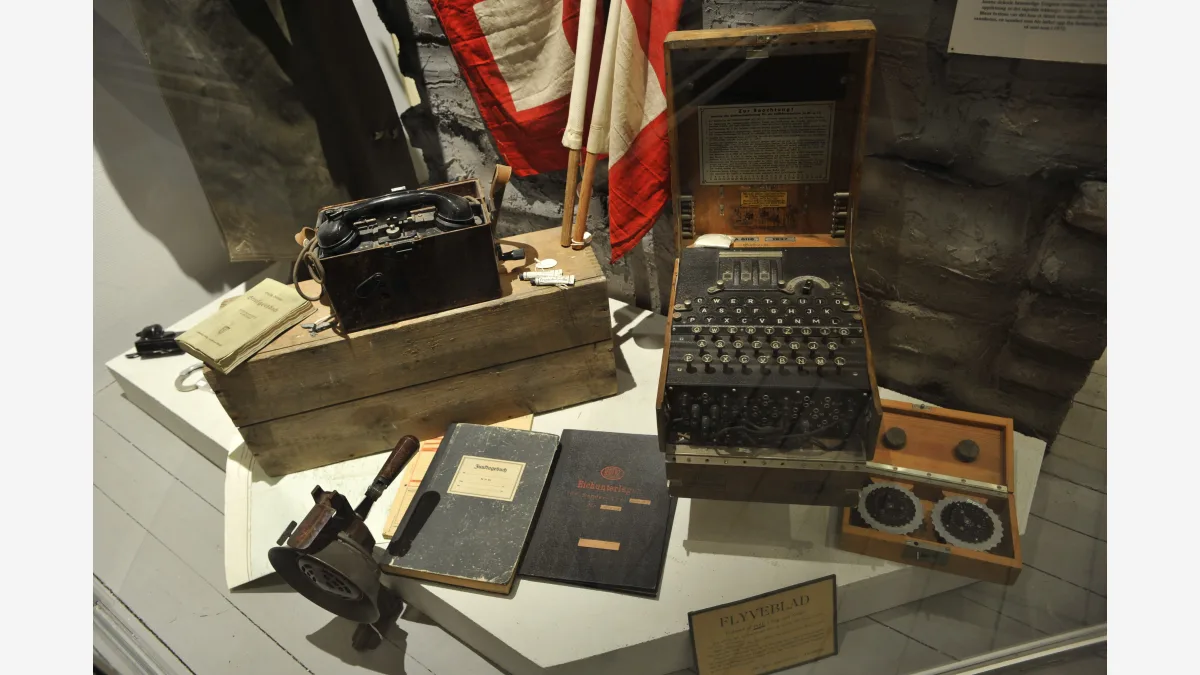
The surviving unsolved traffic is not a measure of Enigma's strength. Alan Turing and the Bletchley Park team built the Bombe, an early electromechanical computer, and were reading Enigma messages during the war itself. The handful that remain opaque are mostly corrupted — mistranscribed in the archive, or garbled by the original operators encoding them.
That makes them a peculiar benchmark. Solving one is less about defeating a cipher than about reconstructing what a person got wrong eighty years ago, which is closer to archival forensics than cryptography.
The autonomy question the logs did not settle
Weierud, a retired electrical engineer who maintains the Crypto Cellar archive and validated the Astra solution, said that work left him in awe, writing that it behaved like a professional cryptanalyst and archive researcher and covered in two days what would take a human weeks or months. He noted he had personally spent weeks on the Bundesarchiv files the model cited.
He also flagged something unresolved. Astra's logs discuss archived messages held in a private collection that Crypto Cellar does not host. Weierud does not know whether the model actually reached them, speculating that another researcher may have posted them somewhere or that the model found German government archives. For anyone assessing what a large language model did unaided, that ambiguity matters: an AI agent that quietly located an off-catalog source is doing something different from one reasoning purely from public data.
What it signals
Neither break advances cryptography. Both are evidence about research capability — the ability to scope a problem, locate archival material, build a tool, and verify a result. Anthropic and OpenAI have both spent 2026 arguing their models can do exactly that, and independent validation by a domain specialist is a more credible test than a benchmark score. With seven messages left, the supply of clean trials is nearly exhausted.
FAQ
Did Claude Opus 5 break Enigma on its own?
No. Willis provided significantly more guidance than the earlier Astra attempt required, and the break relied on using a known officer's signature as a crib. The model executed a directed strategy rather than devising one independently.
How many unbroken Enigma messages are left?
Weierud counts seven still unbroken, plus one where the plaintext is known but the key has not been recovered. Most remain unsolved because of transcription errors or mistakes made by the original encoders, not because the cipher held.
Who verifies these solutions?
Frode Weierud, a retired electrical engineer who maintains the Crypto Cellar archive of Enigma records and messages, validated Leffen's Astra solution and counts the Opus message among those now broken. Independent checking matters here because the plaintext has to be consistent with the recovered machine settings.