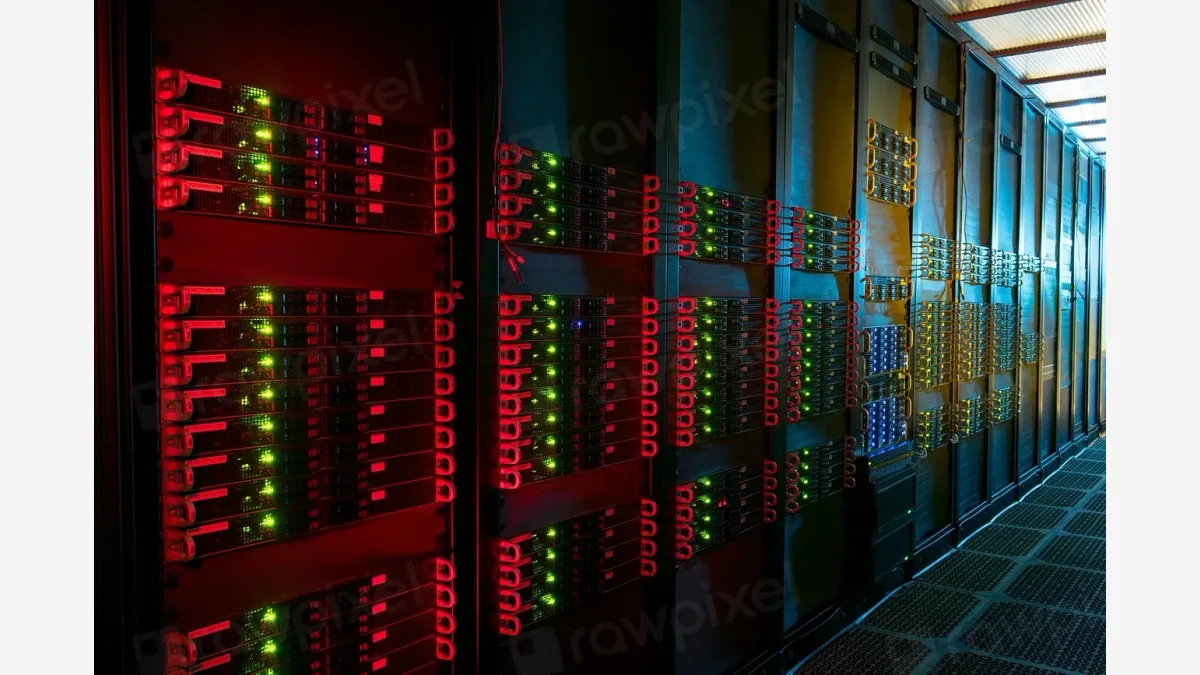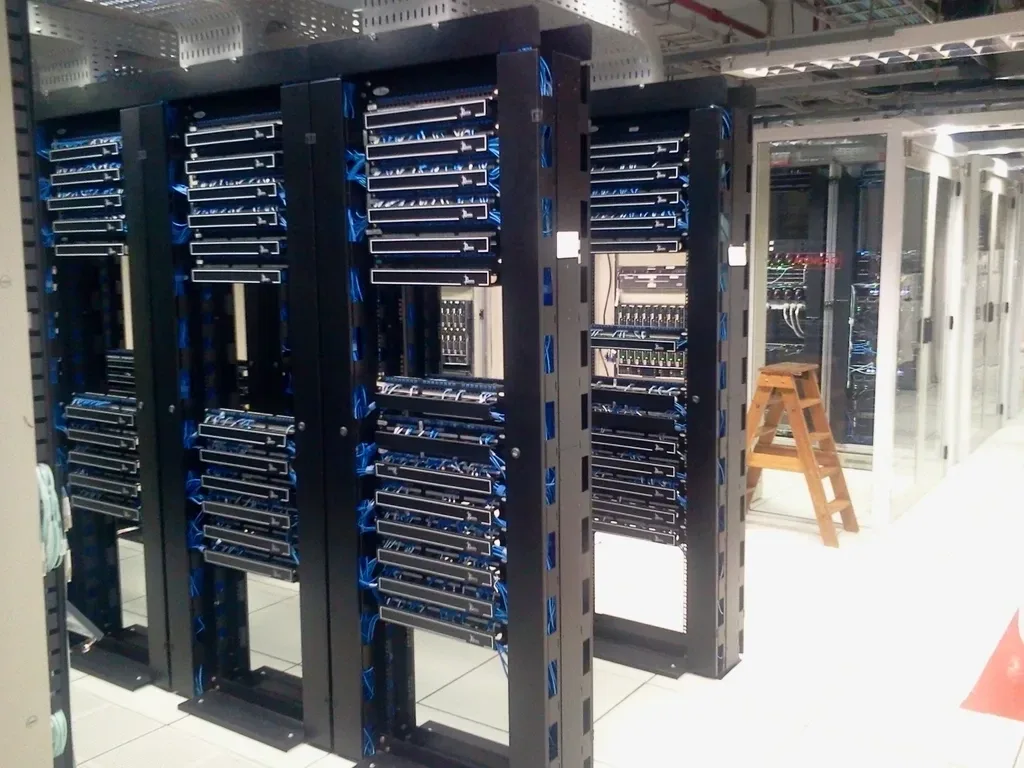
Alibaba Group chief executive Eddie Wu told the company's Apsara Conference in Hangzhou on Tuesday that Alibaba Cloud will expand its global datacenter fleet to more than 20 gigawatts by 2032, and unveiled the Zhenwu V900 accelerator he says will fill those halls. Shares in the Chinese technology giant rose roughly 3% in Hong Kong on the announcement, which also confirmed that training has begun on the next Qwen foundation model.
Key takeaways
- Alibaba Cloud is targeting more than 20GW of global datacenter capacity by 2032, a six-year runway that is slower than the pace set by its US rivals.
- The Zhenwu V900 delivers three times the performance of the Zhenwu M890 released in May, carries 216GB of memory and 1200 GB/s of inter-chip bandwidth, but does not reach mass production until the first quarter of 2027.
- Qwen 4 is in training, with two successors on the roadmap that Wu expects to scale to five trillion and ten trillion parameters respectively.
What Alibaba announced at Apsara
Wu framed the buildout inside a long analogy about electrification, arguing that today's AI products are the light bulb rather than the electric motor. He prefers the term machine thinking to artificial intelligence, and told the audience it would eventually handle 99.9% of cognitive work, much as engines came to drive almost all physical labor.
The concrete commitments underneath the rhetoric were the 20GW target, the V900, and a model roadmap. Alibaba has started training Qwen 4, with Qwen 4.5 and Qwen 5 to follow at five and ten trillion parameters. Wu also said the Qwen team is exploring recursive self-improvement, where models help design their successors, and has made what he called meaningful progress.
How 20GW compares with the US buildout
The comparison Wu did not draw is the one that matters. Commercial real estate firm Cushman and Wakefield counted 37.7GW of datacenter capacity under construction in the United States alone last week, according to The Register's account of the keynote. Stargate alone has promised 10GW by 2029, Meta has announced a 5GW campus for its own use, and Amazon added 3.8GW in a single twelve-month stretch.
Measured that way, Alibaba is committing to less capacity over a longer horizon than several individual American projects. The number that constrains this plan is not 20, it is 2032. A six-year horizon is long enough that the chip generation announced on stage will be two or three generations obsolete before the last megawatt is energized, which makes the target a statement of direction rather than a schedule anyone can hold the company to. Wu also declined to say where the new sites will go. Beijing has been steering large builds toward China's western provinces, where renewable power is cheap and plentiful, and community resistance to datacenters has hardened everywhere else — including California, which just created a separate utility rate class for them.
What the Zhenwu V900 can and cannot do yet
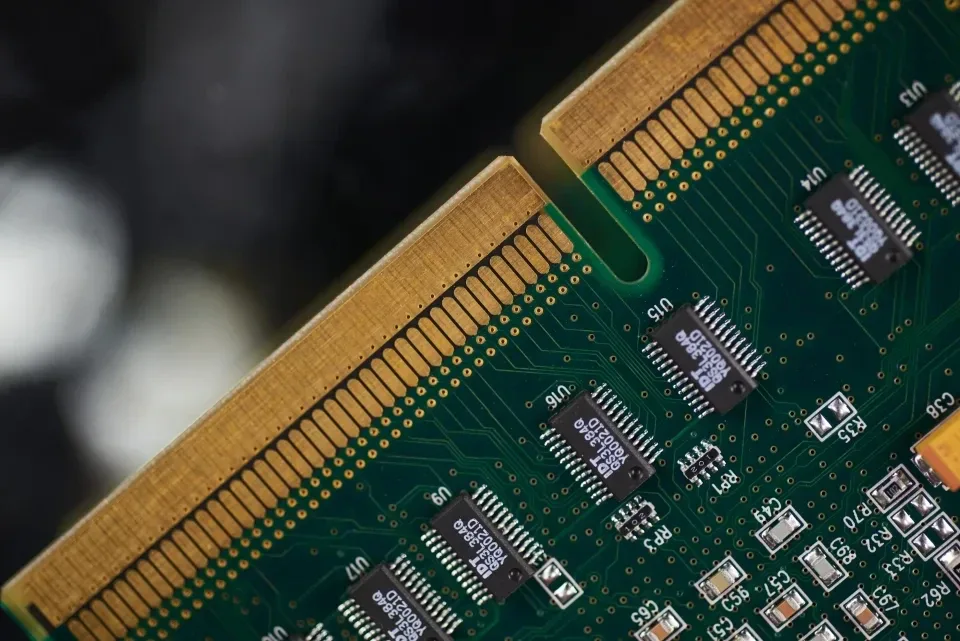
The V900 comes from T-Head, Alibaba's in-house semiconductor unit. Wu called it the most powerful AI chip in China today and said it triples the performance of the M890 that launched in May. Published specifications list 216GB of memory and 1200 GB/s of inter-chip interconnect bandwidth, with native support spanning FP32 down to FP4 and a reworked tensor unit aimed at FP8 and FP4 precision — the kind of aggressive quantization that makes large-scale training and inference affordable.
Alibaba says a single cluster can hold up to half a million V900s. The catch is timing: CNBC reported the chip is scheduled for mass production and commercial release in the first quarter of 2027, and Wu gave no date for when enough parts will exist to assemble one of those clusters. Existing Zhenwu silicon already serves more than 650 customers across automotive, finance, energy and manufacturing.
Outlook
The announcement lands a week after Huawei described AI infrastructure that scales to a million processors, and it reads less like a race to match American megawatts than a claim that China can supply its own compute. That claim is the interesting part. For a company cut off from the highest-end Western accelerators, domestic silicon is not a cost optimization but a precondition, and a datacenter target means very little without parts to fill it. Whether that holds depends on yields at T-Head and on Qwen staying competitive — the family topped the Artificial Analysis agentic index in August. For now, Wu has bought six years and a chip that ships next year.
FAQ
When will Alibaba reach 20GW of datacenter capacity?
Alibaba Cloud is targeting more than 20 gigawatts of global capacity by 2032, roughly six years out. Eddie Wu did not disclose where the new facilities will be built or how the buildout will be staged across that period.
Is the Zhenwu V900 available now?
No. Alibaba unveiled the chip at Apsara on September 22, 2026, but mass production and commercial release are scheduled for the first quarter of 2027. Its predecessor, the Zhenwu M890, launched in May 2026 and is already deployed with more than 650 customers.
How large will the next Qwen models be?
Qwen 4 is currently in training. Wu said the two models that follow it are expected to scale to five trillion and ten trillion parameters respectively, which would make them among the largest announced foundation models from any Qwen generation to date.