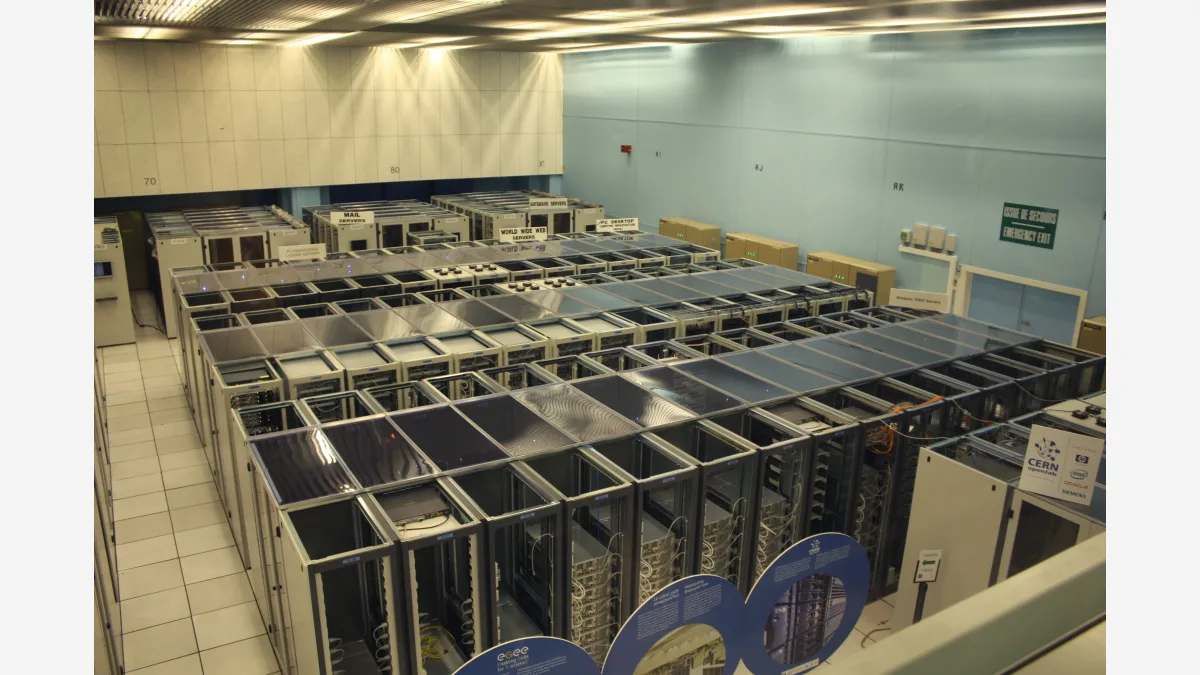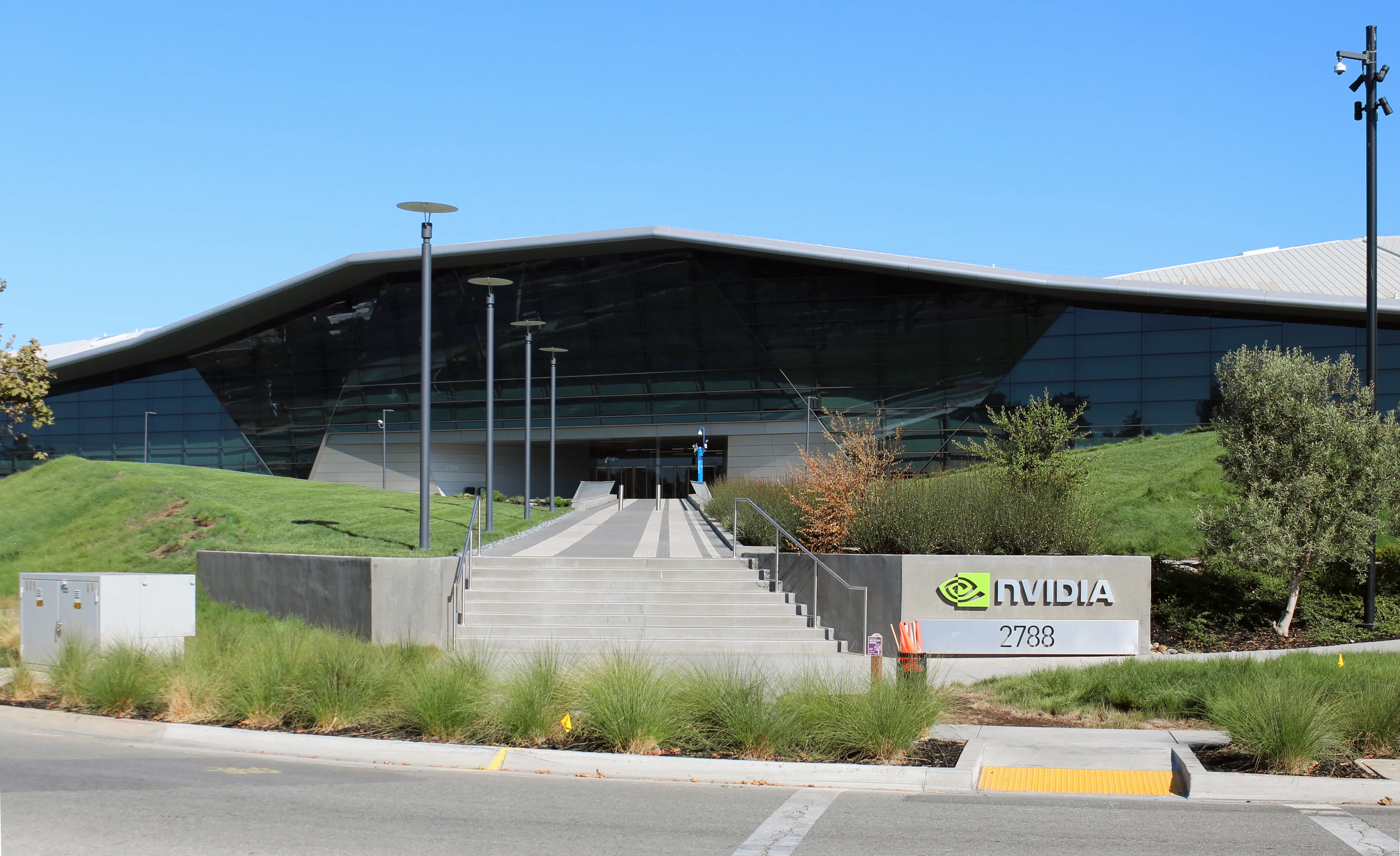
Amazon is putting another 2 million Nvidia GPUs into its data centers. The two companies announced the expanded partnership Wednesday, during Nvidia's quarterly earnings call.
The number is the headline, but the timing is the story. Amazon committed to more than 1 million Nvidia GPUs only five months ago. Nvidia said that since then, "demand has exceeded those expectations."
Neither side disclosed financial terms. At prevailing GPU prices, the order is worth tens of billions of dollars.
What Amazon Is Actually Buying
The chips are Blackwell Ultra, Rubin and Rubin Ultra parts, headed to Amazon Web Services facilities in 2027 and 2028. Deployment of the new tranche begins in the third quarter.
The deal reaches well past accelerators. Nvidia said its networking hardware — the fabric that stitches thousands of GPUs into a single machine — will be integrated across AWS, along with its CPUs, data processing software, open models and robotics platform.
Nvidia is also shipping an unspecified number of Vera CPUs to AWS, some paired with Rubin and some standalone, according to finance chief Colette Kress. Kress said Nvidia expects Vera to reach "every major hyperscaler, neocloud, AI lab, and system OEM," with early shipments already going to partners including Oracle and SpaceXAI. Chief executive Jensen Huang has claimed Vera opens a "brand-new $200 billion TAM."
On robotics, Amazon plans to adopt Nvidia's full physical AI stack for its warehouse fleet: Omniverse for simulation, Cosmos for world models, Isaac for development and Jetson for on-robot compute. On the enterprise side, AWS will serve Nvidia's Nemotron open models through Bedrock and SageMaker.
Buying From a Competitor
The awkward part is that Amazon is scaling up its own silicon at the same time. Its Trainium accelerators compete directly with Nvidia parts for deep learning work, and AWS is reportedly in talks to sell them to outside data center operators. Its Arm-based Graviton CPUs target the same server sockets Nvidia's Vera is aimed at.
That business is not small. Amazon said on its last earnings call that custom chips crossed a $25 billion annualized revenue run rate, supported by $225 billion in total commitments from AI labs including Anthropic and OpenAI.
Ordering 2 million GPUs anyway is a useful signal. Hyperscaler in-house silicon is displacing some Nvidia demand at the margin, but not fast enough to change the shape of the curve.
A $96 Billion Quarter
The partnership landed alongside results that beat expectations. Nvidia reported $96.2 billion in revenue for the quarter ended July 26, up 18% sequentially and 106% year over year. GAAP and non-GAAP gross margins both came in at 75.0%.
Data center revenue reached $89.0 billion, up 117% from a year ago. Profit more than doubled to $59.7 billion. Edge computing, which houses the consumer gaming business, contributed just $7.2 billion — up 27% year over year, but held back by what Nvidia called slower consumer PC sales amid elevated memory and system prices.
Guidance is where the round number arrives. Nvidia expects $108 billion in the current quarter, plus or minus 2%, with no Data Center compute revenue from China assumed. That would put it alongside Amazon, Apple and Alphabet in the hundred-billion-dollar-quarter club. Gross margin is guided slightly lower, at 74.0%.
Locking Down Supply
The more revealing figure is on the cost side. Nvidia has now committed $279 billion to secure supply and manufacturing capacity, up from $119 billion a quarter earlier. That includes $92 billion in projected spending across the rest of this fiscal year and $87 billion in fiscal 2028.
The company also announced financing partnerships with Apollo, BlackRock, Blackstone, Brookfield, Goldman Sachs and KKR, intended to mobilize more than $500 billion in third-party capital for AI infrastructure. Nvidia returned roughly $26 billion to shareholders during the quarter.
Huang's framing on the call was economic rather than technical. He argued that AI is now producing "profitable tokens," and that more compute simply yields more of them.
That claim is the load-bearing assumption under every number above. Nvidia's supply commitments and its customers' capital plans both presume the token economics hold as capacity scales. Investors watching Rubin's first full quarter of sales will be checking whether the demand behind these orders is durable or merely early.