
AI Agents Found a Zero-Day in 11 Minutes
Amazon said on Nov. 20 that autonomous AI agents built on the open-source Cairn framework found a zero-day in the MONAI Label medical imaging server and gained root on a university server, moving from API mapping to arbitrary file write in about 11 minutes.
Autonomous AI agents run by a suspected China-linked operator found a previously unknown flaw in MONAI Label, an open-source medical imaging annotation server, and used it to take root control of a university server, Amazon said on Nov. 20. The agents went from mapping the application's API to writing arbitrary files on the server in about 11 minutes, according to Amazon Integrated Security CISO CJ Moses.
Key takeaways
- Agents built on Cairn, an open-source AI penetration-testing framework, were given little more than target IP addresses and the goal "obtain shell access."
- Amazon assessed with high confidence that the MONAI Label path traversal bug was a zero-day, and with moderate confidence that the operator is Chinese-nexus.
- MONAI Label 0.8.6, a security release published on GitHub on Nov. 22 UTC, fixes the flaw, tracked as CVE-2026-133968. Versions 0.8.5 and earlier are affected.
How the Cairn AI agents found the MONAI Label zero-day
Amazon Threat Intelligence spotted the campaign on Sept. 10, 2026, when it found a publicly hosted Cairn instance running without authentication. Its project settings, prompts and AI output were visible to anyone. The prompts were written in Simplified Chinese, and timestamps in executed scripts were set to China Standard Time.
The records showed a roughly 48-hour campaign starting Sept. 8 against IP addresses tied to universities in East Asia outside mainland China. "The agents identified the application's framework, mapped its API endpoints, and found an upload endpoint with a filename parameter," Moses wrote in the AWS Security Blog post. That parameter was vulnerable to path traversal.
In a later session, the agents used the same bug to write a Python reverse shell into sitecustomize.py, a file Python imports at startup. They then triggered a training API endpoint to start a new Python process, which opened a reverse shell running as root.
Failed attempts show agent persistence
The zero-day was not the agents' first try. Against a university Redis server, they worked through about 16 hours and 148 sequential actions, including replication abuse, sandbox escapes, a Log4Shell attempt and credential sprays. A separate operation lasting more than six hours compiled about 80 real usernames and tested more than 30,000 credential combinations against a GPU server. Both failed.
"Neither operation succeeded, yet together they show that the agents kept adapting for nearly a full day without human direction," Moses wrote. In another session, the human operator stepped in and handed the agents a proxy into a second university network. Amazon infers that server, which ran the same vulnerable software, had been compromised with the zero-day.
Why MONAI Label servers were exposed
The GitHub advisory GHSA-qc22-rmgc-vg94, published Nov. 18 and rated critical, says the PUT /datastore/image endpoint used a caller-controlled image ID without validation. Authentication is disabled by default, so any client that can reach the server could exploit it. When the advisory went out, it listed no patched version.
The project's README warns that MONAI Label "is not intended to be run as an internet-facing application." The affected universities were not AWS customers, so Amazon worked with a government partner to notify them.
Context: Cairn spreads from crime to espionage
Gambit Security earlier documented a financially motivated actor using Cairn against online retailers. "Together, these cases show that this autonomous AI agent framework is being adopted in both espionage and criminal operations," Moses wrote. Researchers have also seen agents escalate to SQL injection when ordinary requests failed.
What's next
The 0.8.6 release notes also fix a second path traversal in session uploads and tell operators of exposed 0.8.5 or older servers to check for unexpected file changes. Amazon urges defenders to let high-confidence detections trigger automated responses. "An agent that discovers and exploits a zero-day in minutes completes its activity faster than many security operations centers can manually triage an alert," Moses wrote.
FAQ
What is MONAI Label?
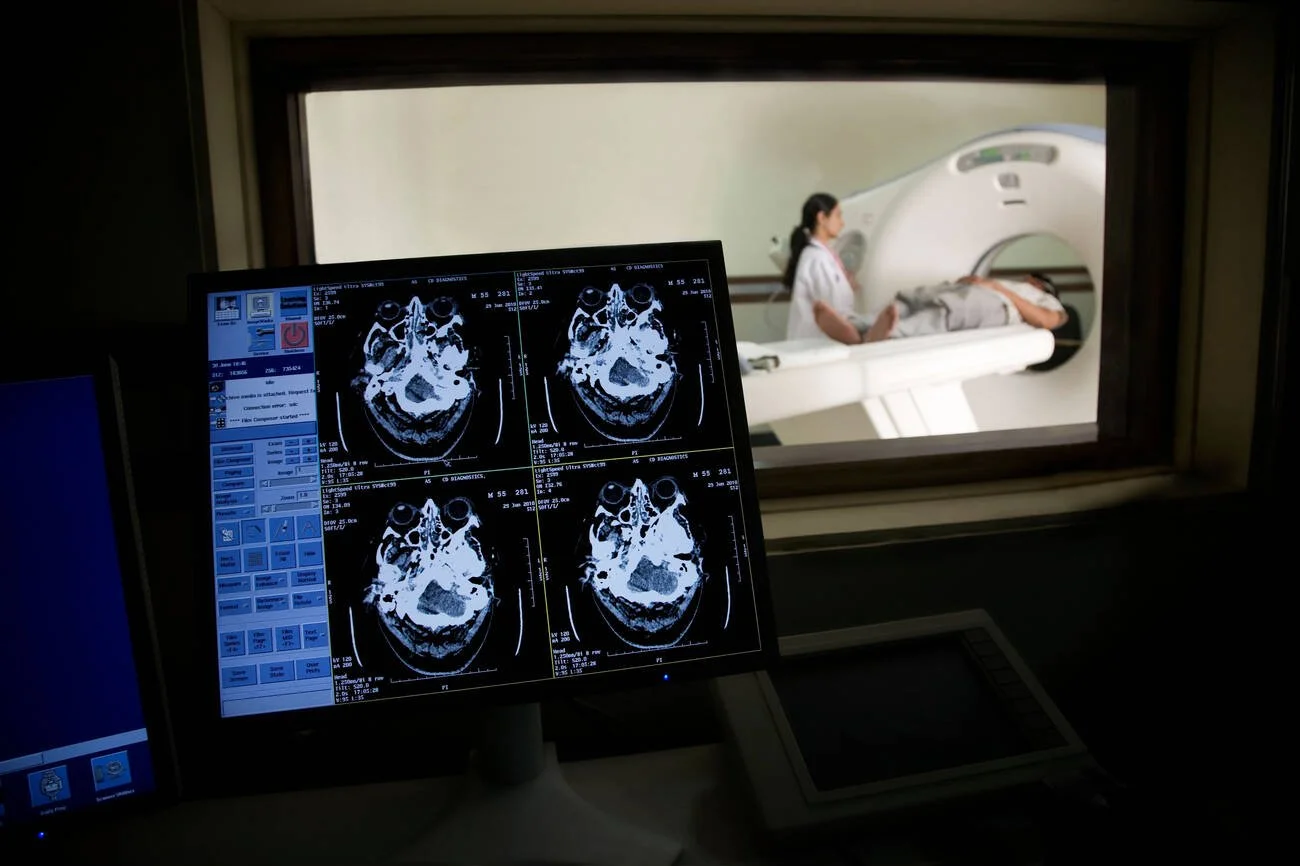
An open-source server-client tool that helps clinicians and researchers annotate medical images with AI assistance.
How do I protect a MONAI Label server?
Upgrade to 0.8.6, enable authentication, keep the server off untrusted networks and run it as an unprivileged user with write access limited to the datastore.
Did a human direct the attack?
The operator supplied targets and goals, and later a proxy. Amazon says the agents planned and adjusted their steps without the operator choosing each one.
References
- Chinese-nexus actor's Cairn AI agents found a zero-day on their own — AWS Security Blog (Nov. 20, 2026)
- Path traversal in datastore upload endpoints allows arbitrary file write — Project MONAI, GitHub (Nov. 18, 2026)
- Releases · Project-MONAI/MONAILabel — GitHub (MONAI Label 0.8.6, Nov. 22, 2026)
- China attackers deployed AI agents that autonomously found and exploited a 0-day to take over a university server — The Register (Nov. 20, 2026)
Editor responsible for AI Newsway. Writes about AI, developer tools, cloud and productivity technology.

Comments 0
Comments are currently disabled.