
Anthropic Is Building Its Own AI Chips to Halve Claude's Inference Bill
Anthropic confirmed an in-house silicon team to co-design chips with Claude models, targeting roughly 50% lower cost per token as inference bills mount.
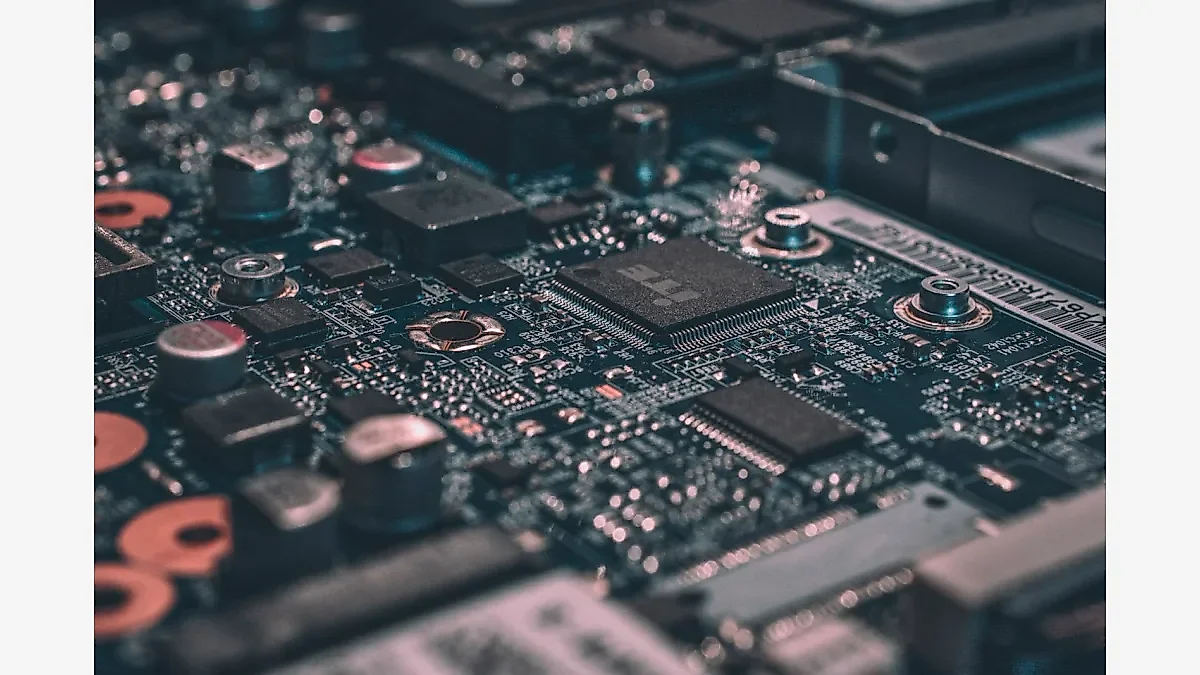
Anthropic confirmed on August 5 that it is standing up an in-house team to design custom AI chips, a move that pulls the Claude maker into hardware development alongside every other frontier lab of its size. The company said it intends to co-design silicon and its models together rather than treating them as separate problems.
The stated target is blunt: roughly a 50 percent cut in the cost of serving each token. That figure explains the whole project better than any architectural argument.
The arithmetic behind the decision
Anthropic is serving billions of tokens a day against a revenue run-rate reported at around $30 billion. At that volume, inference stops being a line item and becomes the dominant variable in gross margin. Every fraction of a cent shaved off a token compounds across an enormous base, and the savings accrue permanently rather than resetting with each new model.
Co-design is the lever. General-purpose accelerators are built to run anything, which means they carry silicon that a specific model family never touches. A chip designed around the exact shapes of Claude's attention and memory access patterns can drop that overhead, while the model side can be tuned to fit what the hardware does fastest. Neither optimization is available when the model team and the chip vendor are different companies on different roadmaps.
Hiring engineers who have shipped silicon
The company has started recruiting engineers who have personally taped out finished semiconductor designs, with one listing advertising $320,000 to $485,000. The emphasis on shipped designs is telling. Chip programs fail on execution far more often than on architecture, and the constraint is people who have carried a design through fabrication rather than people who can describe how it works.
Technical leadership sits with Clive Chan, who joined Anthropic in early June. Chan was the second hardware hire on OpenAI's dedicated chip team, which he joined in January 2024 from Tesla's Dojo supercomputer program. That resume traces the small pool of engineers who have worked on custom AI accelerators at frontier labs, and it is a pool every lab is now drawing from.
Not a break with existing suppliers
Anthropic has been explicit that this is not a pivot away from its current compute partners. The company maintains a multi-chip strategy and has already secured substantial TPU capacity from Google along with work involving Broadcom, whose custom silicon business has become the default route for hyperscalers building their own accelerators.
Running proprietary chips beside vendor hardware is the pattern Google established with TPUs and Amazon followed with Trainium and Inferentia. It hedges supply risk without forcing an all-or-nothing bet on a first-generation design, which historically underperforms.
A long road to first silicon
The gap between announcing a silicon team and running production inference on your own chips is typically measured in years, not quarters. Design, verification, fabrication and the software stack each take time, and a first generation that merely matches commodity accelerators is a common outcome.
What the announcement does change is the competitive read. Vertical integration from model to metal is becoming table stakes among labs operating at Anthropic's scale, and staying purely a software company increasingly means accepting a structural cost disadvantage against rivals who own their hardware.
Editor responsible for AI Newsway, operated by ZZEM. Writes about AI, developer tools, cloud and productivity technology.

Comments 0
Comments are currently disabled.