
Google Picks New Glenn for 2029 AI Satellites
Google has signed Blue Origin to launch Project Suncatcher satellites, each with roughly the capacity of a data center rack, on a dedicated New Glenn flight targeted for the first quarter of 2029.
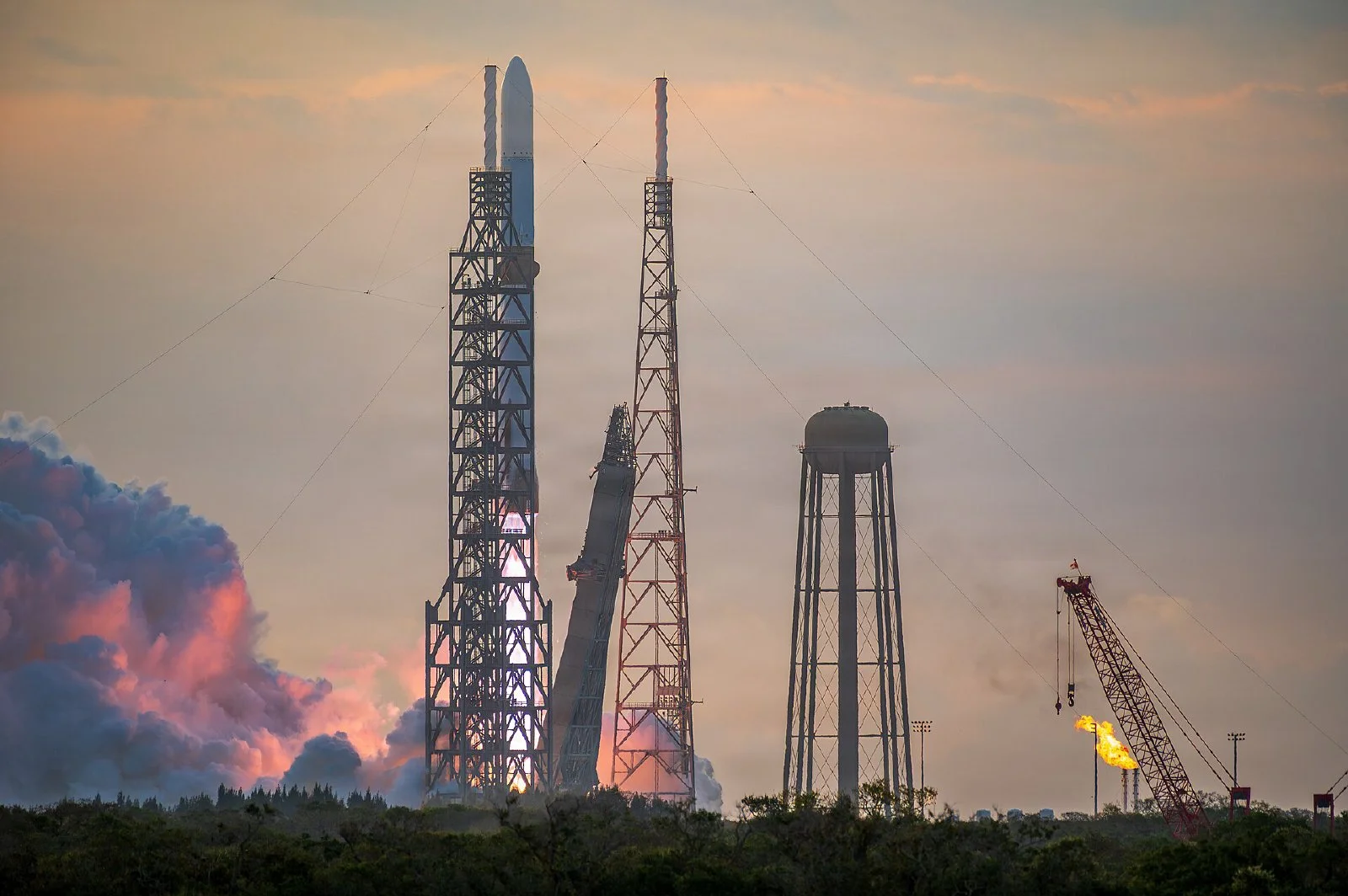
Google has booked a dedicated Blue Origin New Glenn rocket to carry satellites for Project Suncatcher, its research effort to run AI computing in orbit on solar power. The launch is targeted for the first quarter of 2029, the two companies said Nov. 19, and will be Google's first heavy-lift flight for the program.
Key takeaways
- New Glenn will deploy Google's Suncatcher satellites, each with "roughly the capacity of a data center rack," into sun-synchronous orbit in Q1 2029.
- Neither company disclosed how many satellites will fly or what the launch costs.
- The deal moves Suncatcher from a single rideshare prototype toward a dedicated mission, ahead of a two-satellite laser-link test planned for 2027.
What Google and Blue Origin announced
The two companies signed a launch services agreement for Project Suncatcher, according to a Blue Origin announcement. In a Google blog post, Travis Beals, senior director of Paradigms of Intelligence at Google, said New Glenn "will deploy our satellites — each with roughly the capacity of a data center rack — into sun-synchronous orbit."
Beals called the dedicated launch "a crucial milestone on our long-term roadmap" and said it builds on Google's ongoing work with other satellite and launch partners. Jordan Charles, Blue Origin's senior vice president of New Glenn, said: "Project Suncatcher represents the ambitious missions New Glenn was built to support."
Trade publication Via Satellite reported that the companies did not specify the number of satellites. No price was given.
Why a heavy-lift rocket matters for space AI compute
Until now Suncatcher has flown small. Its first prototype, built with Earth-imaging company Planet and carrying four TPUs, launched Oct. 1, 2026, on SpaceX's Transporter-18 rideshare mission. On Oct. 30 Google said the satellite had run its Gemma 4 open model in orbit, a milestone AI Newsway has covered alongside Google's custom silicon push.
Rack-scale satellites are a different class of payload. Blue Origin says New Glenn can lift 45 metric tons to low Earth orbit and has a seven-meter fairing, which gives room for larger spacecraft than rideshare slots allow.
Context: the physics and the price tag
Google laid out the case in a November 2025 research post. In the right orbit, it said, a solar panel can be up to eight times more productive than on Earth and produce power nearly continuously. A sun-synchronous orbit, the same kind New Glenn will target, keeps satellites in near-constant sunlight.
The engineering bar is high. Google's illustrative design flies 81 satellites in a cluster with a 1-kilometer radius at about 650 kilometers altitude, with neighbors 100 to 200 meters apart. Links between them need tens of terabits per second; a bench demonstrator reached 800 Gbps each way. In proton-beam tests, Google's Trillium TPUs showed memory irregularities only after about three times the expected five-year mission dose.
Cost is the open question. Google estimated that launch prices may fall below $200 per kilogram by the mid-2030s, the point at which orbital compute could roughly match the energy costs of a ground data center.
What's next
Google still plans to put two interconnected satellites in orbit in 2027 to test laser links between spacecraft. The New Glenn flight would come after that. Watch for details on satellite count, thermal design and New Glenn's launch cadence before the 2029 window.
FAQ
When will Google's Suncatcher satellites launch on New Glenn?
The launch is targeted for the first quarter of 2029.
How many satellites will Blue Origin carry?
Neither company has said. Google said only that each satellite will have roughly the capacity of a data center rack.
Is Google offering AI services from space?
No. Google describes Suncatcher as a long-term research moonshot and has not announced a commercial service.
References
- We're partnering with Blue Origin on our first heavy-lift Project Suncatcher launch. — Google (Nov. 19, 2026)
- Google Selects Blue Origin's New Glenn for Project Suncatcher — Blue Origin (Nov. 19, 2026)
- Exploring a space-based, scalable AI infrastructure system design — Google Research (Nov. 4, 2025)
- Google Orders Heavy-Lift Launch for Project Suncatcher from Blue Origin — Via Satellite (Nov. 19, 2026)
Editor responsible for AI Newsway. Writes about AI, developer tools, cloud and productivity technology.

Comments 0
Comments are currently disabled.