
Google Satellite Runs Gemma 4, Writes Haiku
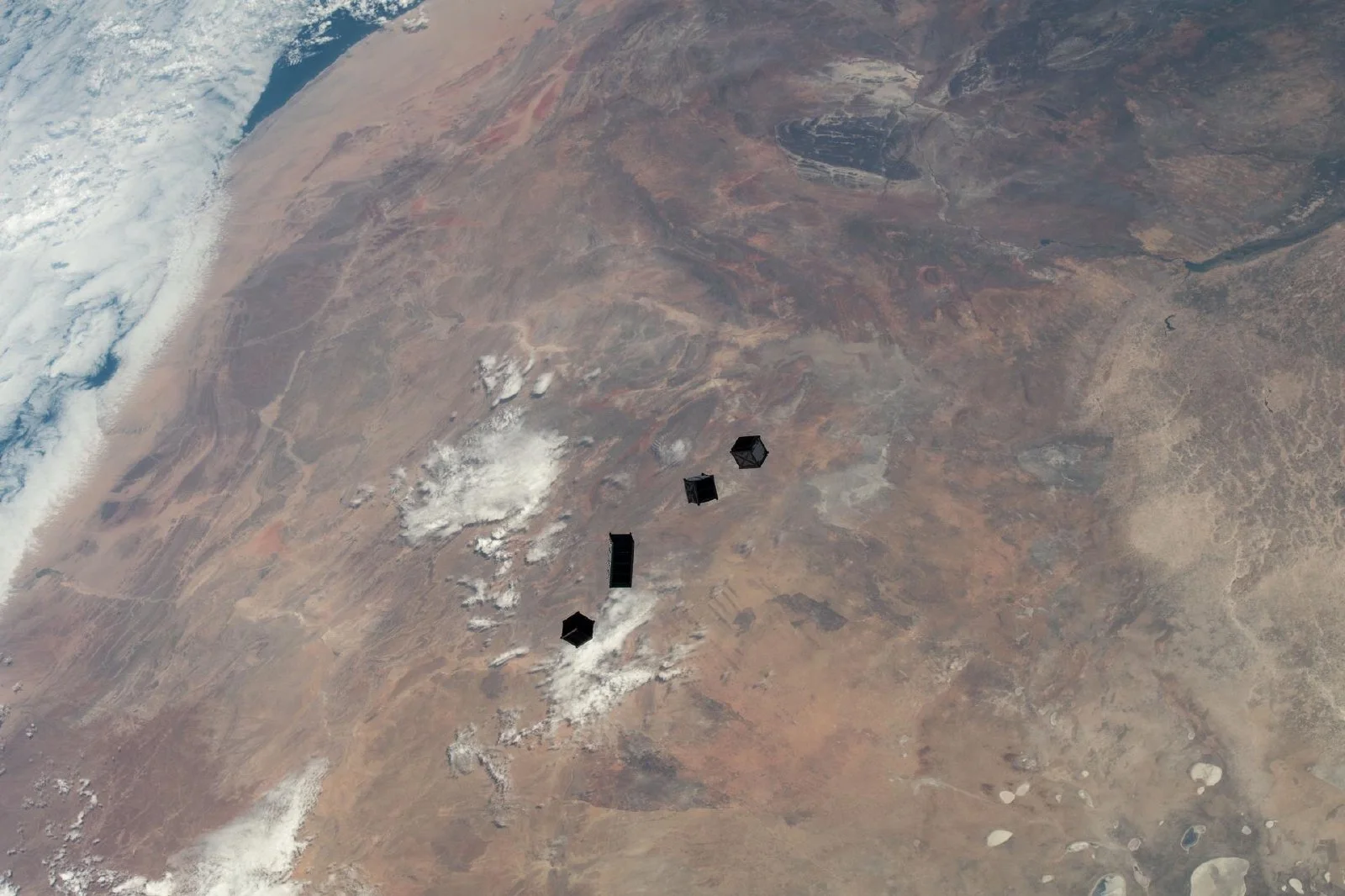
Google said Oct. 30 that its Project Suncatcher prototype satellite, launched Oct. 1 with Planet, ran the Gemma 4 open model on an orbiting TPU and downlinked a haiku over Svalbard — its first AI response from space.
Google said Oct. 30 that the prototype satellite for Project Suncatcher, its research effort to test whether AI data centers can one day run in space, has returned its first AI-generated response from orbit. The onboard Gemma 4 open model wrote a haiku about being in space, which was downlinked as the satellite passed over Svalbard, Norway, according to a Google Research blog post by Travis Beals, senior director of Paradigms of Intelligence.
Key takeaways
- Google calls the haiku the first "Hello World" response from a data center class TPU operating in orbit, about four weeks after the Oct. 1 launch.
- The satellite, built with Earth-imaging company Planet, now moves on to tests of how the TPUs behave under thermal stress and space radiation.
- The next milestone is a pair of interconnected satellites in 2027, meant to test links between spacecraft.
What Google's Suncatcher satellite did in orbit
The prototype launched Oct. 1 on SpaceX's Transporter-18 rideshare mission from Vandenberg Space Force Base in California, Planet said in its launch announcement. In the weeks that followed, Google's team worked through a commissioning checklist that included powering up the host and TPU trays and running early machine learning tests.
During a ground-station pass, engineers uplinked a prompt asking Gemma 4 to write a haiku about being in space. The reply read: "Blue marble below / Data streams in silent grace / Starlight feeds my core." Google said later tests included space-themed limericks and prompts asking the model to report on the status of payload systems.
"Our chips have officially earned their space wings," the post said. A Google spokesperson told TechCrunch the satellite is operating "nominally." TechCrunch also reported that the craft generates up to 1 kilowatt of power and that the TPU's power demands limit it to roughly 20 minutes of operation at a time.
Why Google wants TPUs in space
The case Google makes is about energy. In a Sept. 24 briefing, the company said satellites in low Earth orbit get near-constant sunlight and can generate "up to eight times more solar power than on Earth." Future Suncatcher satellites are meant to carry dozens of TPU chips each and fly in clusters.
Before launch, Google said it put Trillium TPUs in a proton beam at UC Davis's Crocker Nuclear Laboratory while running AI workloads. Early results showed the chips survived a total ionizing dose greater than a five-year space mission would deliver. The satellite also passed three-axis vibration testing; Google said launch subjects a spacecraft to about 10 g, while individual chips can see 50 to 100 g.
Context: a working chip is not a data center
A haiku is a small workload, and Google presents it as a first step rather than a capability demonstration. The hard problems remain open. Heat must leave a vacuum by radiation alone, and bit flips from radiation can corrupt data, which is why the coming tests focus on both.
The milestone does confirm something ground tests could not: a commercial AI accelerator survived launch, booted in orbit and ran an off-the-shelf open model. AI Newsway previously reported on Google's broader push to diversify its custom AI silicon on the ground.
What's next for Project Suncatcher
Google says the team will now measure how the TPUs perform under thermal stress and radiation exposure. If that goes well, two interconnected satellites are planned for 2027. Google said in September that the 2027 pair will test satellite-to-satellite laser links, which a clustered orbital compute system would depend on.
FAQ
What AI model is running on the Suncatcher satellite?
Google said the satellite runs Gemma 4, its open model, on board. Engineers send prompts during ground-station passes and receive the responses on later downlinks.
Is Google running AI services from space now?
No. The prototype is a research satellite that gathers data on how TPUs handle launch, radiation and heat. Google has not announced any commercial service.
When will Google launch more Suncatcher satellites?
Google's next milestone is two interconnected satellites in 2027, designed to test links between them.
References
- We've received our first response from the Project Suncatcher prototype satellite. — Google (Oct. 30, 2026)
- Behind Project Suncatcher, our moonshot to put AI in space — Google (Sept. 24, 2026)
- Google's first data center satellite is online and writing poetry — TechCrunch (Oct. 30, 2026)
- Planet launches Suncatcher, Tanager-2, and 18 SuperDove Satellites — Cyprus Shipping News (Oct. 8, 2026)
Editor responsible for AI Newsway. Writes about AI, developer tools, cloud and productivity technology.

Comments 0
Comments are currently disabled.