
Kimi K3.1 Pro Nears Claude, Strips Cyber Data
Moonshot AI released Kimi K3.1 Pro this week, reporting 65.7% on Terminal-Bench 4.0 versus 66.4% for Claude Opus 5.5, and said it removed cyber-related training data from the open-weight version due by Nov. 4.
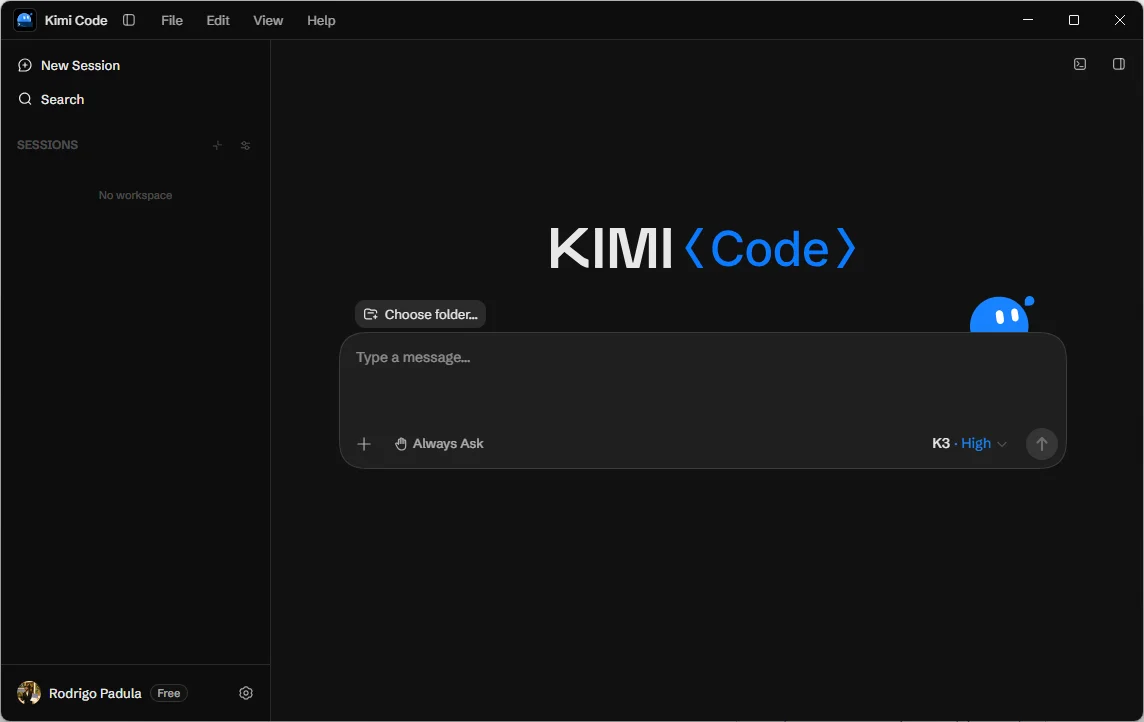
Moonshot AI this week released Kimi K3.1 Pro, a post-trained successor to its Kimi K3 model that the Beijing lab says nearly matches Anthropic's Claude Opus 5.5 on agentic coding. The company also said it stripped cyber-attack training data out of the version it will publish as open weights, which it promised by Nov. 4.
Key takeaways
- Kimi K3.1 Pro scored 65.7% on Terminal-Bench 4.0, ahead of OpenAI's GPT-6 Astra at 58.2% and just behind Claude Opus 5.5 at 66.4%, according to Moonshot's own tests.
- Moonshot removed cyber-related data from both training stages of the open-weight build; on its xdev-bench-hard test, that cut the solve rate from 90.5% to 81.0%.
- The model is live in Kimi's apps and API now, with full weights due by Nov. 4. Moonshot has not published a license or API price for it.
What is Kimi K3.1 Pro?
K3.1 Pro is the first model in Moonshot's K3.1 series. In its technical blog post, the company describes it as "a post-trained version of Kimi K3, with substantially larger post-training compute." It calls the model "3T-class" and gives it a 1-million-token context window, but discloses no exact parameter count or architecture changes.
A Highspeed variant runs two to three times faster, Moonshot says. Both are on kimi.ai, the Kimi apps, Kimi Code and the Kimi API, as kimi-k3.1-pro and kimi-k3.1-pro-highspeed. Business accounts need an administrator to switch the model on.
Kimi K3.1 Pro benchmarks vs. Claude and GPT
Moonshot's headline number is on Terminal-Bench 4.0, a test of agents working in a command-line environment. All scores below are company-reported, run at maximum reasoning effort, and have not been independently reproduced.
| Benchmark | Kimi K3.1 Pro | Comparison |
|---|---|---|
| Terminal-Bench 4.0 | 65.7% | Claude Opus 5.5 66.4%; GPT-6 Astra 58.2% |
| BenchCAD, with tools | 92.7 | Claude Opus 5.5 96.2; GPT-6 Astra 95.9 |
| Kimi Code Bench 3.0 long-horizon (internal) | 61.2% | Kimi K3 55.95% |
| Kimi Hallu Bench Hard, claim-level hallucination rate (internal; lower is better) | 8.3% | Kimi K3 23.4% |
Moonshot cautioned that its hallucination test is a deliberately adversarial stress test, not a measure of everyday error rates. Runs in which models looked up answers online were scored as zero, it said.
Why Moonshot removed cyber data from the open weights
The most unusual part of the release is a self-imposed limit. For the open-weight version, Moonshot said it "identified and removed cyber-related data from both training stages," covering mid-training and the reinforcement-learning task mix while keeping general coding work.
The trade-off is measurable on the company's xdev-bench-hard cyber test. A checkpoint built through the same pipeline without the removal solved 90.5% of problems at pass@3, while the released K3.1 Pro solved 81.0%. That is still far above Kimi K3's 33.3%, and below the 100 Moonshot cited from a third-party evaluation of OpenAI's GPT-5.6 Sol.
"First, we aim not to release open weights that would extend the absolute frontier of cyber capability," the company wrote. It said K3.1 Pro's cyber skills trail frontier proprietary models that have been public for at least three months.
Context: Chinese open-weight models keep closing the gap
The release continues a year in which Chinese open-weight labs have pressed U.S. closed models on agentic tasks, as when Qwen3.8 Max climbed above every American lab but two on one independent index.
Policy in Beijing is shifting at the same time. On Oct. 16, China's Ministry of Commerce and Ministry of Science and Technology issued Notice No. 48, a draft revision of the country's export-restricted technology catalog that adds AI items. The ministry said technology already in the public domain through open-source release or academic papers would not be covered, and that open-source AI exports would get automatic licensing.
What's next
The key date is Nov. 4, when Moonshot says full weights will be published. Outside researchers can then test the benchmark claims and whether the cyber-data removal holds up under fine-tuning. Licensing and API pricing remain open questions.
FAQ
Is Kimi K3.1 Pro open source?
Moonshot calls it an open-weight model and says full weights will be released by Nov. 4, 2026. It has not yet stated which license will apply.
How does Kimi K3.1 Pro compare with Claude Opus 5.5?
On Moonshot's own Terminal-Bench 4.0 run, K3.1 Pro scored 65.7% against 66.4% for Claude Opus 5.5. On BenchCAD with tools, Opus 5.5 led 96.2 to 92.7.
References
- Kimi K3.1 Pro Tech Blog: Advancing Open Intelligence — Moonshot AI (October 2026)
- Moonshot AI Releases Kimi K3.1 Pro, First Model in New K3.1 Series — Unite.AI (Oct. 23, 2026)
- 商务部新闻发言人就修订《中国禁止出口限制出口技术目录》答记者问 — China Ministry of Commerce (Oct. 16, 2026)
Editor responsible for AI Newsway, operated by ZZEM. Writes about AI, developer tools, cloud and productivity technology.

Comments 0
Comments are currently disabled.