
Meta's Andromeda Now Scores 1B Ads a Second
Meta said on Oct. 28 that its rebuilt Andromeda ad-retrieval system scores more than 1 billion ads per second, 100x its 2024 throughput, using about 300x fewer inference FLOPs. Meta credits it with a 2.4% rise in Facebook conversions since 2025.
Meta said on Oct. 28 that the newest version of Andromeda, the system that picks which ads are even considered for a Facebook or Instagram user, now scores more than 1 billion ads per second in production, 100 times the throughput of the 2024 version. The details come from a post on Meta's engineering blog written by 12 Meta engineers.
Key takeaways
- Andromeda now scores every eligible ad at more than 1 billion ads per second, a 100x jump over the 2024 system.
- The new model uses about 300 times fewer inference-time computations (FLOPs) than its 2024 predecessor, and Meta says it cut network traffic roughly 100x.
- Meta credits Andromeda with a 2.4% increase in Facebook conversions since 2025.
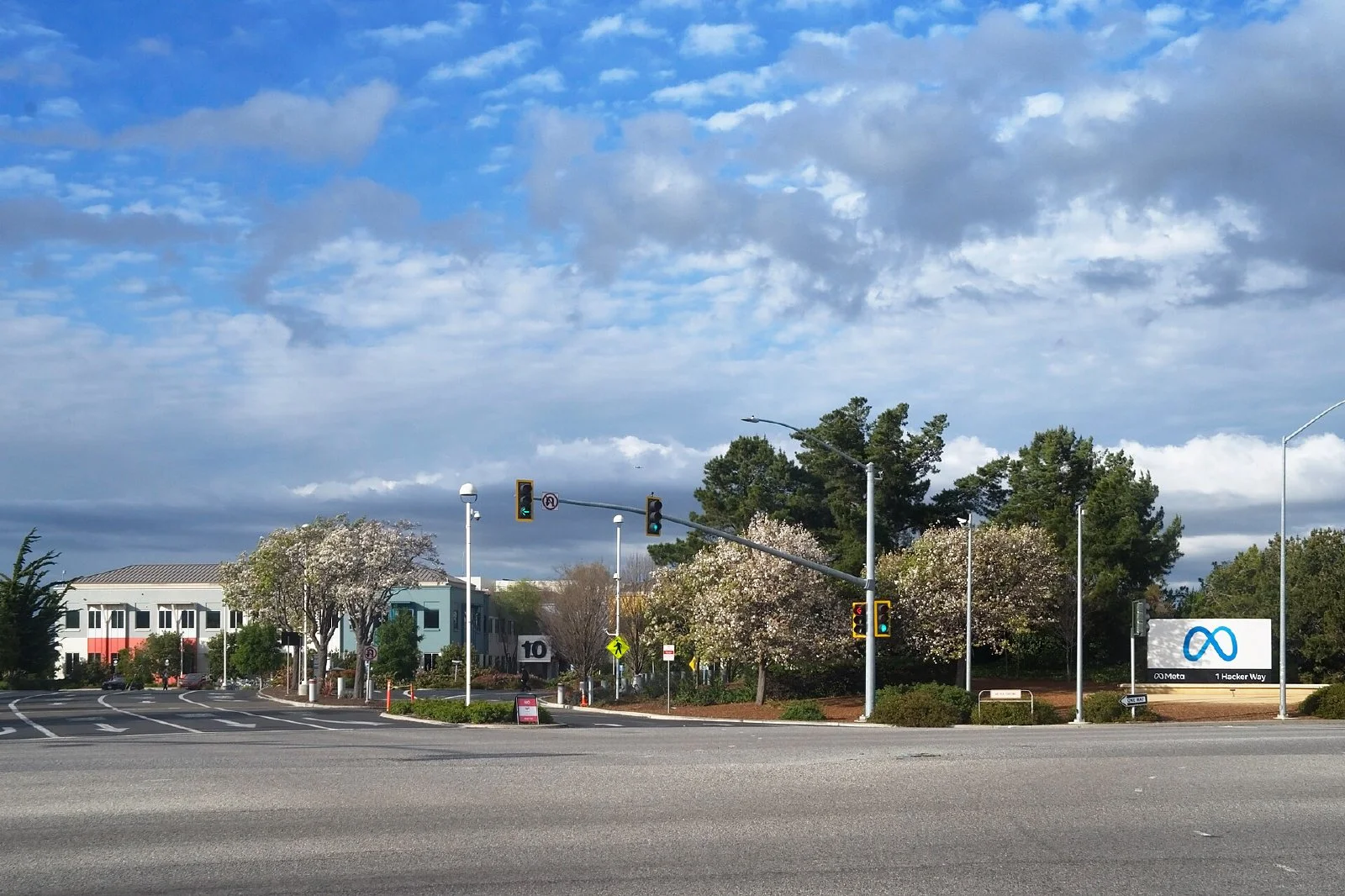
What Meta Andromeda does in ad delivery
Andromeda handles retrieval, the first stage of Meta's ad pipeline. It narrows a huge pool of eligible ads to a short list of candidates, which a heavier ranking model then scores in detail. If a relevant ad is dropped here, the ranking stage never sees it.
That pool keeps growing. Meta's engineers wrote that generative AI creative tools have helped advertisers make hundreds of millions of new ads. The 2024 system evaluated tens of millions of ads per second on each GPU card, while current demand calls for billions per card, according to the post.
How Andromeda reached 1 billion ads per second
The team borrowed a mixture-of-experts (MoE) design from large language models. A single user model became a set of specialized "user towers," each drawing on different signals, such as past ad engagement or features derived from language models. A gating network then routes each candidate ad to the most relevant experts.
The bigger change was in systems engineering. Because the new model needs far less computation, Meta fused embedding lookups, interaction and scoring into one GPU kernel, keeping intermediate data out of slower memory. That kernel alone runs at more than 10 billion ads per second on a single Nvidia GH200 chip, the post said.
Meta also moved targeting checks, scoring and final top-K selection onto the same GPU server. Instead of shipping long candidate lists across the network, the system sends a compact query and gets back only the winners. "The largest gains come from designing model, system, and hardware as one integrated stack," the engineers wrote.
Nvidia's role in the speedup
In early 2026, Nvidia supplied optimized GPU kernels while Meta integrated and benchmarked the pipeline. The gating network sped up 5.3 times, from 2.4 billion to more than 10 billion ads per second, reaching about 85% of peak memory bandwidth. Eight-bit (INT8) math added up to another 2x over 16-bit kernels with comparable accuracy, Meta said. "The additional model complexity is essentially free on Tensor Core hardware," the post said.
Context: AI is now Meta's ad business
Meta first described Andromeda in a December 2024 post, citing a 10,000x increase in model capacity, a 6% recall gain and an 8% ads-quality gain on selected segments. That system ran on Nvidia's Grace Hopper Superchip and Meta's own MTIA accelerator.
The stakes are large. Meta's quarterly filing shows advertising revenue of $63.06 billion for the three months ended Sept. 30, 2026, up from $50.08 billion a year earlier, or about 26%. Ads made up nearly all of the $64.6 billion total. At that scale, even a 2.4% gain in conversions matters to advertisers' returns. Meta did not say how much of its revenue growth it attributes to Andromeda.
What's next
Meta said it is carrying the work over to Nvidia's Grace Blackwell platform, with a focus on the ratio of CPU to GPU compute, which the team calls important for Andromeda-style workloads. The engineers also said the full pipeline benchmarks at multiple times current production throughput on one GPU server, suggesting more headroom. Meta did not give a timeline for deploying those gains.
FAQ
What is Meta Andromeda?
It is Meta's machine learning system for ad retrieval, the first step that selects candidate ads before a separate ranking model decides which one a user sees.
Will advertisers need to change anything?
Meta's post describes back-end infrastructure and does not mention new settings for advertisers. Meta says the benefit is better matches and more conversions.
Which chips does Andromeda run on?
The figures in the post were measured on Nvidia GH200 hardware, and Meta says it is extending the work to Nvidia Grace Blackwell.
References
- Meta Andromeda: Powering the Next Generation of Ads Retrieval Through Model-System Co-Design — Engineering at Meta (Oct. 28, 2026)
- Meta Andromeda: Supercharging Advantage+ automation with the next-gen personalized ads retrieval engine — Engineering at Meta (Dec. 2, 2024)
- Meta Platforms, Inc. Form 10-Q for the quarter ended Sept. 30, 2026 — U.S. Securities and Exchange Commission
Editor responsible for AI Newsway. Writes about AI, developer tools, cloud and productivity technology.


Comments 0
Comments are currently disabled.