Apple published a privacy paper on September 9, 2026 detailing how its new Siri Audio Intelligence features listen to the world around you without ever letting the raw audio reach the operating system, apps, or even Apple itself. The document accompanied the iPhone Duo launch event, where Apple introduced Siri Recap, Live Rewind, Sound Recognition, and Music Recognition for its latest wearables.
Key takeaways
- All four Audio Intelligence features run through the Secure Exclave on the new S11 chip in the Apple Watch Series 12 and Apple Watch Ultra 4, a hardware-isolated buffer that no app, the OS, or Apple can access.
- Apple says raw audio is never saved as a file and is continuously overwritten, so recordings do not accumulate on the device.
- Live Rewind and Siri Recap arrive in beta later in 2026, starting in English, and Siri Recap must be turned on manually.
How the privacy model works
According to The Verge, which first surfaced Apple's document, audio flows into a protected buffer inside the S11 chip's Secure Exclave, a compartment built directly into the silicon of the Apple Watch and iPhone. Sensor data is processed there, walled off from the rest of the system.
The raw audio used to generate transcriptions and summaries is inaccessible to the OS, any app, the user, and Apple. Because old audio is continuously replaced by new audio, nothing lingers in the buffer. Apple's framing is that the features can be genuinely ambient without creating a pool of recordings that could later be exposed.
What each feature does
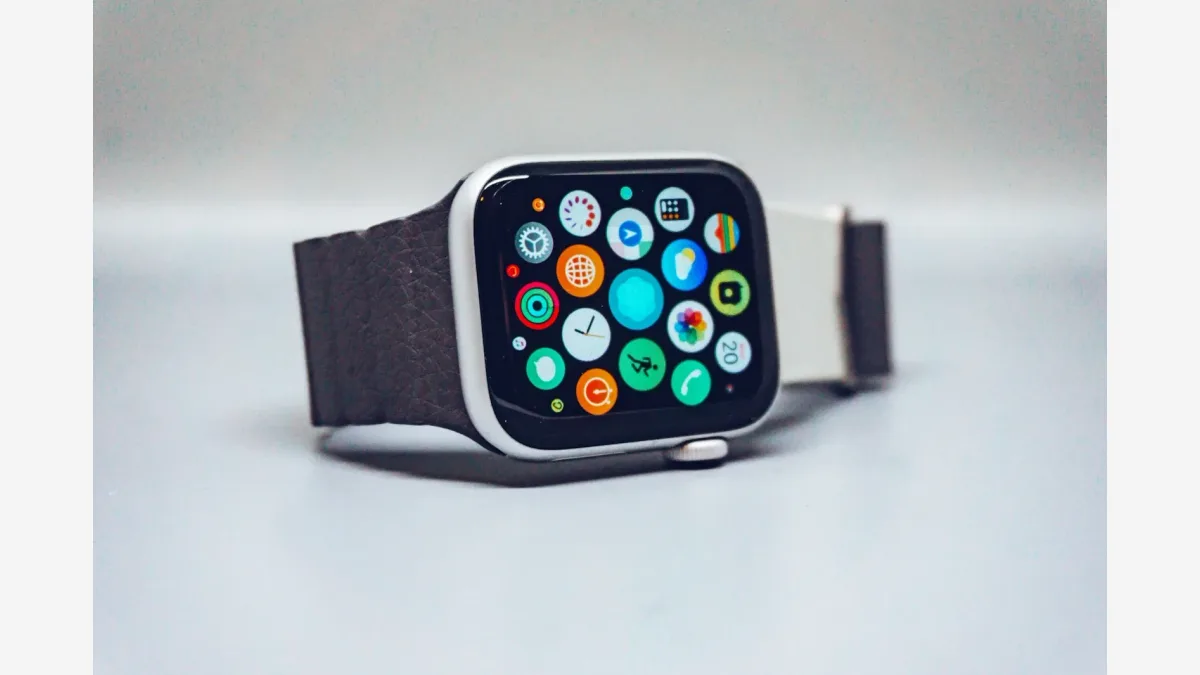
Double-press the Digital Crown and Live Rewind surfaces a short transcript of the previous quarter-minute of talk right on the watch face, useful for catching a detail you half-heard. As 9to5Mac detailed, nothing runs in the background and the text vanishes unless you either query Siri about it or deliberately keep it in the Siri app.
Siri Recap goes further, condensing a conversation into a summary that lands in the redesigned Siri app, but it stays dark until a user switches it on. Apple says the on-device summarization is engineered to scrub out identifiers like bank details and ID numbers before anything is stored. Rounding out the lineup are Sound Recognition and Shazam-powered Music Recognition.
Why it matters
Ambient listening on a wrist-worn device is exactly the kind of capability that alarms privacy advocates, and Apple is trying to get ahead of that reaction with hardware guarantees rather than policy promises. Putting the processing inside a dedicated silicon enclave is a bet that verifiable isolation will reassure users more than a privacy pledge alone.
The launch also underscores how central on-device AI has become to Apple's strategy, a theme running through our earlier coverage of how Apple trained a China-only AI model with Alibaba's help.
Outlook
The real test comes when Live Rewind and Siri Recap reach beta later this year. Independent security researchers will want to probe whether the Secure Exclave holds up in practice, and regulators in privacy-sensitive markets will scrutinize how the features behave once they leave English-only beta.
FAQ
Does Apple record my conversations with these features?
No. Apple's paper states that the audio never leaves the S11 chip's isolated enclave, is never written to a file, and gets overwritten moment to moment. Neither the system software, third-party apps, the wearer, nor Apple can reach it.
Which devices support Audio Intelligence?
You need the S11 silicon and its Secure Exclave, which ship in the Apple Watch Series 12 and Apple Watch Ultra 4. Two of the features, Live Rewind and Siri Recap, land in an English-only beta before the end of the year.
Is Siri Recap turned on by default?
It is not. A user has to switch Siri Recap on before it does anything. From then on it distills conversations into the Siri app while filtering out flagged details like financial figures and identification numbers.