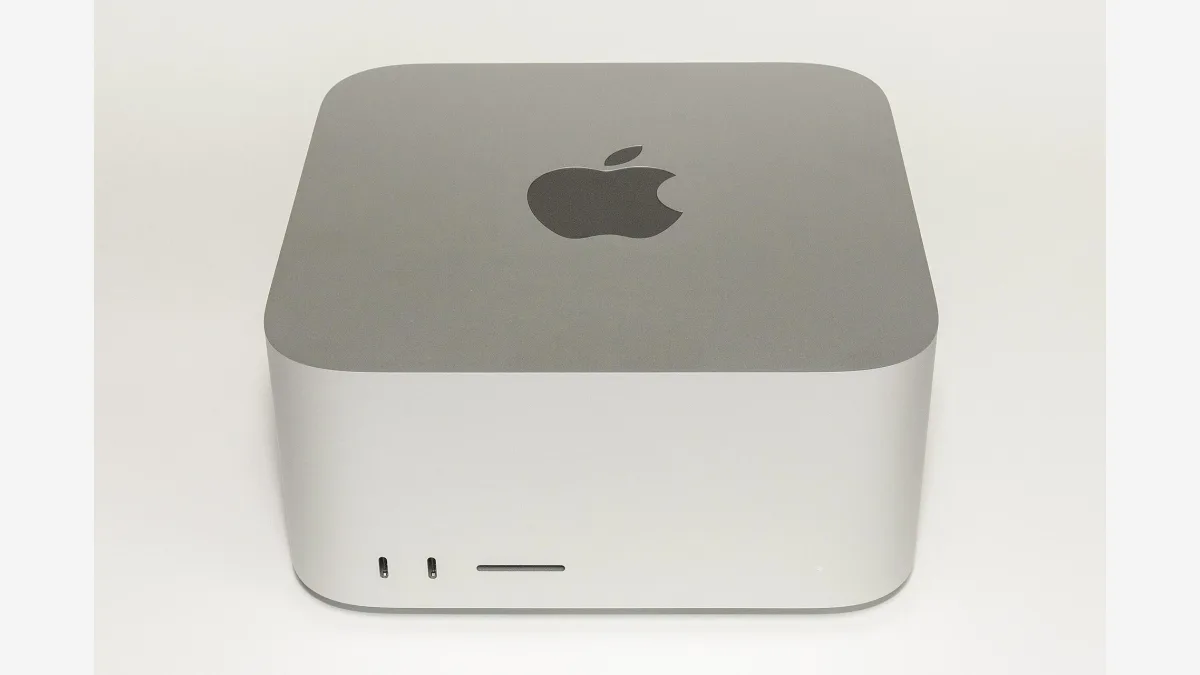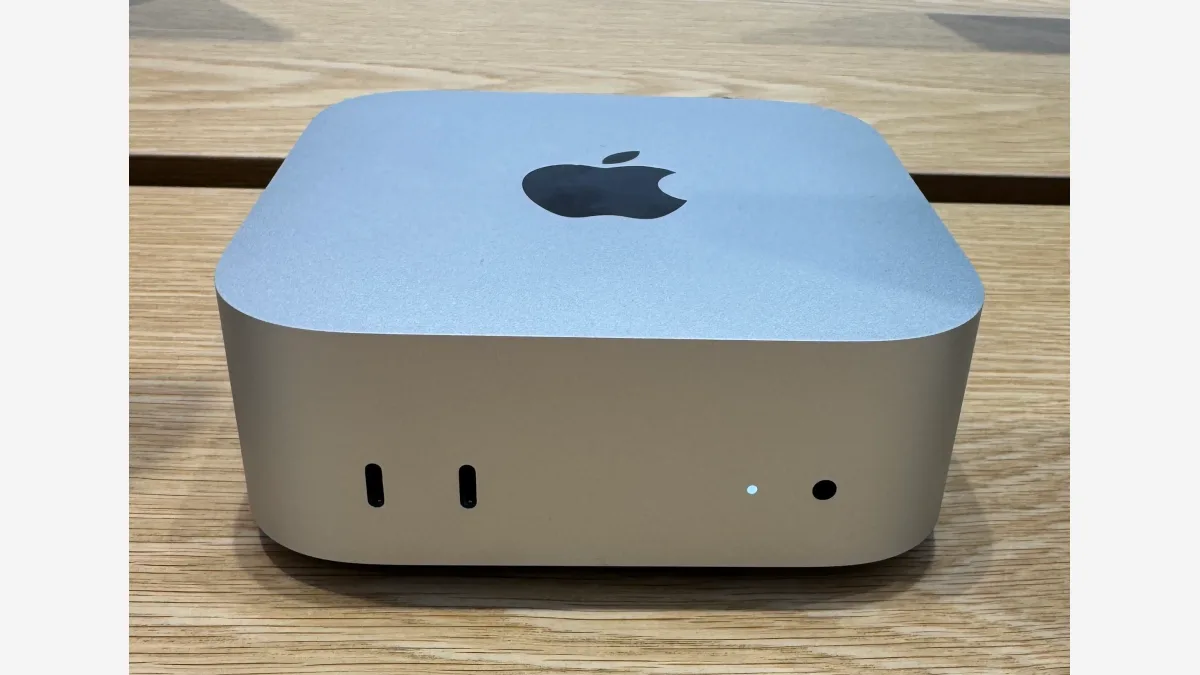
Apple has put its first 2-nanometer processor inside its cheapest desktop. The M6 debuts in a refreshed Mac mini. A new M5 Ultra powers the top Mac Studio. Pre-orders opened August 25, and most configurations ship September 22.
The pitch this time is not video editing. It is inference. Apple is selling both machines as places to run large language models locally, and for once it says so outright.
What Is Actually New in M6
M6 is the first Apple chip to mix all three of its CPU core types in one design. The 12-core complex pairs two super cores with four performance cores and six efficiency cores. Super cores arrived earlier this year in M5 Pro and M5 Max. This is the first time they share a die with both of the other types.
The GPU also grows to 12 cores. Each one carries a Neural Accelerator. Apple pairs that with a Dual 16-core Neural Engine, a first for the line, and system frameworks can drive both engines simultaneously.
Memory bandwidth reaches 170GB/s against a 32GB ceiling. Apple claims 40 percent faster CPU work than the M4 mini and roughly four times its AI performance. In LM Studio, the company measured prompt processing at up to 4.8x the M4 and 13.5x the M1.
M5 Ultra Goes Quad-Die
The Mac Studio chip is the stranger engineering story. M5 Ultra fuses two dual-die M5 Max parts into a single quad-die package using UltraFusion. Inter-die bandwidth clears 4.4TB/s. Connection density rises more than sixfold. Software sees the four dies as one processor.
That yields up to 36 CPU cores, up to 80 GPU cores, and a 32-core Neural Engine. Unified memory tops out at 512GB moving at 1.2TB/s. Apple puts peak AI GPU compute at 4.5 times the M3 Ultra.
A catch is buried in the naming. M5 Ultra is still a 3nm part. Ultra chips are assembled from Max dies, so they trail the newest process node by a generation. Apple is also skipping M6 Pro and M6 Max entirely, jumping straight to M7 in mid-2027.
Clustering Is the Real Feature
Mac Studio now officially supports clustering over Thunderbolt 5 using RDMA. Memory pools across machines. Apple says four linked Studios can reach triple the inference throughput of a single unit.
This mostly formalizes something users were already doing. macOS 26.2 added low-latency communication between Thunderbolt 5 hosts last December for distributed MLX inference. Developers have been daisy-chaining minis ever since to hold models no single box can fit.
The economic logic is easy to follow. Coding-agent bills keep climbing. Open-weight models such as Qwen and DeepSeek cover a good share of that work. At some point a capital purchase beats a metered one.
Every Number Here Is Apple's
Readers should hold the benchmarks loosely. All figures come from Apple's internal testing. All use "up to" phrasing. All lean on scattered baselines — M1, M4, M2 Pro, M3 Ultra — rather than a single consistent reference point. Independent reviews do not exist yet.
Pricing is the harder sell. The M6 mini starts at $899 and the M5 Pro mini at $1,699, each $100 above its predecessor. Mac Studio runs $2,499 with M5 Max and $5,499 with M5 Ultra. Apple's entry desktop now costs roughly 50 percent more than it did two months ago.
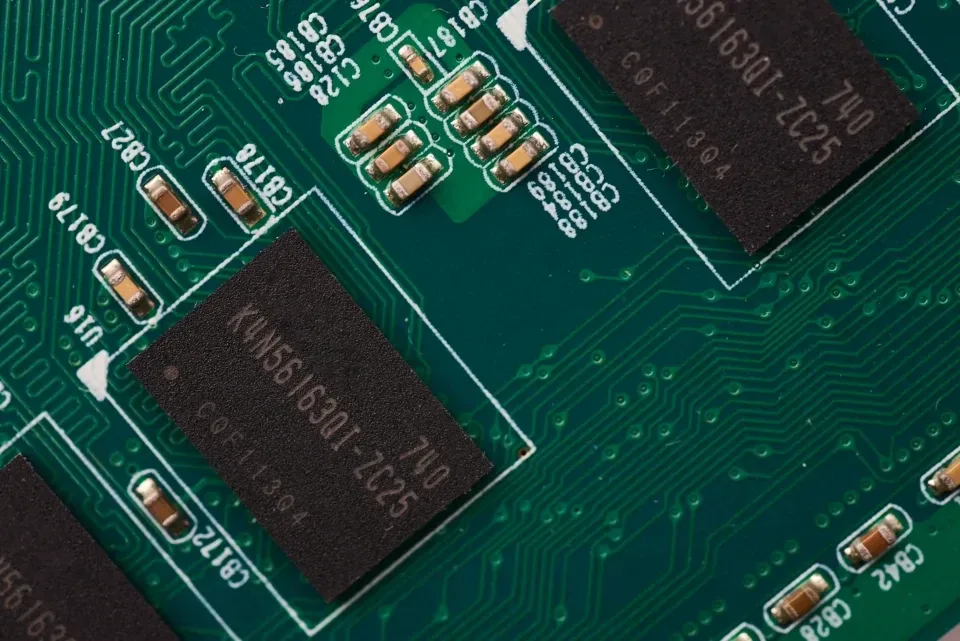
Memory supply is the reason. DRAM prices jumped about 90 percent quarter over quarter in early 2026, then climbed more than 50 percent again. IDC frames it as a structural reallocation of wafer capacity toward HBM for AI. The 512GB configuration will not ship until late October.
There is a footnote of corporate timing as well. Tim Cook hands the chief executive role to John Ternus on August 31. These are the last Macs launched on his watch.