Inference chip startup Etched said Tuesday it has raised $700 million at a $21 billion valuation, led by the quantitative trading firm Jane Street. The round arrives roughly a month after Etched closed a $300 million Series C at a $10.3 billion valuation in July, and less than a year after the company was worth $5 billion in December.
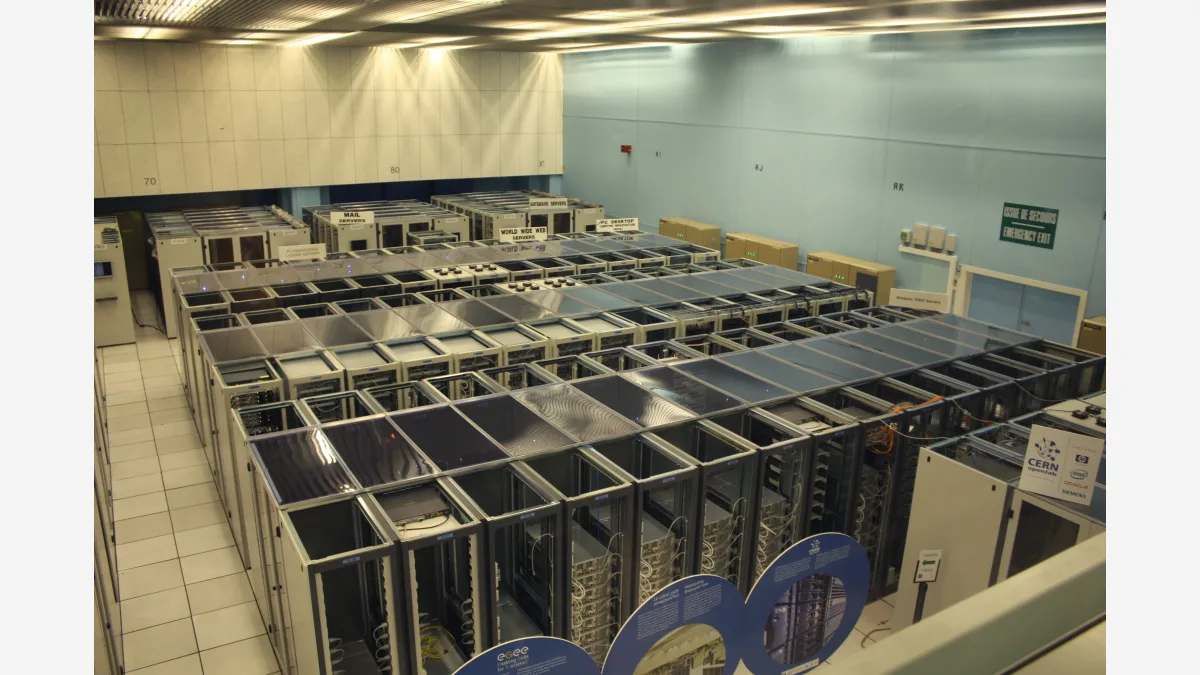
Compressing an $11 billion valuation increase into four weeks is unusual even by the standards of the current AI hardware market. What distinguishes this round is who led it: Jane Street said in its announcement that it tested the chip, was pleased with the early results, and now has its own Etched rack running in its datacenter, framing the investment as a purchase decision that preceded the financing rather than a bet placed ahead of one.
Splitting inference into two problems
Etched's pitch rests on treating inference as two distinct workloads rather than one. Co-founder and COO Robert Wachen described the split to TechCrunch as prefill and decode: prefill is the compute-heavy stage where the system ingests and understands the prompt and its context, while decode is the memory-bound stage that produces the output tokens a user actually reads. Most accelerators are asked to do both on the same silicon, and the resulting compromise leaves capacity idle in one phase or the other.
The company built separate answers for each. Its prefill chip runs at low voltage, which lets Etched pack in more transistors without the thermal ceiling that constrains conventional high-end AI parts, translating into higher token throughput. For decode, the company developed a new memory design and interconnect it calls cluster-scale memory, letting many chips share a single pool at low latency. Wachen said the combination yields higher speeds at lower cost, and Etched sells the result as complete systems it markets as frontier inference clusters, the same packaging logic Nvidia applies to what it calls AI factories.
Shedding an early reputation
Etched is also still correcting the impression that made its name. The company originally intended to etch a specific model directly into silicon, an approach that would have tied each chip to one frontier architecture, and the perception has outlived the design decision. Etched now says its systems run any frontier model, a distinction that matters commercially because model architectures turn over faster than hardware depreciation schedules.
The cap table is crowded with names that rarely appear together on a hardware deal, including Kleiner Perkins, Sequoia Capital, Andreessen Horowitz, Peter Thiel, Tiger Global, Bain Capital Ventures, Stripes and Blackstone. That breadth reflects a thesis the market has converged on quickly: inference, not training, is where the recurring spend lives, and the workload is specialized enough that a purpose-built architecture might defend margin against a general-purpose incumbent.
The obvious caution is that none of this has been independently benchmarked. Etched has not published third-party performance or cost-per-token figures, and a single customer rack, however credible the customer, is a smaller proof point than a deployment at hyperscaler volume. Jane Street's workloads are also latency-obsessed in ways most enterprise inference is not, so its satisfaction does not automatically generalize.
What the round does confirm is that capital is now willing to underwrite inference silicon at valuations previously reserved for model labs. Etched joins a widening field of specialized challengers arguing that the economics of serving tokens differ enough from training them to justify separate hardware. The next test is whether any of them can convert prototype enthusiasm into volume shipments before the incumbent closes the gap.