Starcloud has raised another $250 million, and the number that matters most is not the one in the headline. It is 88,000. That is how many spacecraft the company has already asked the FCC for permission to operate.
The round is an extension of a $170 million Series A closed in March. Manhattan West led it. Nvidia and Cisco both took part, and a person familiar with the deal put Nvidia's contribution at $25 million. Benchmark, EQT, Soma, NFX, 776, Cedar Capital, Goanna Capital and Standard Capital also participated.
The extension values the company at $2.3 billion, roughly double its March mark. Total capital raised since the 2024 founding now sits near $450 million. That is a lot of money for a 25-person company.
The bottleneck is not silicon
Most orbital compute pitches stumble on physics. This one stumbles on logistics.
Chief executive Philip Johnston told TechCrunch that securing launch capacity has become one of his largest cost lines. The reason is a scheduling gap. SpaceX plans to wind down the Falcon 9 program in 2028 and shift to Starship, which has not yet demonstrated the rapid reuse the entire economic case depends on.
The alternatives are thin. Blue Origin's New Glenn and ULA's Vulcan are not flying on a regular cadence. Rocket Lab's Neutron has not reached the pad. Johnston was blunt about the exposure, saying that failing to book SpaceX capacity in 2029 would be a problem for the company.
Elon Musk did not help the timeline this week. SpaceX is pushing back its attempt to catch a returning Starship by several months, with a first re-flight now targeted for late this year or early 2027.
What actually flies, and when
Near-term plans are modest by comparison. Two 8 kW compute satellites, designated Starcloud-2, are slated for rideshare flights in 2027. They will run inference workloads for customers that include US government agencies.
The company is weighing a dedicated Falcon 9 booking and contracts with other providers to widen its options. The larger Starcloud-3 spacecraft is built around Starship and has no obvious fallback.
Manufacturing is scaling ahead of the launches. Starcloud is building production lines inside a 100,000-square-foot facility in Woodinville, Washington, a short drive from where SpaceX and Amazon assemble their own communications satellites.
Why Nvidia wrote the check
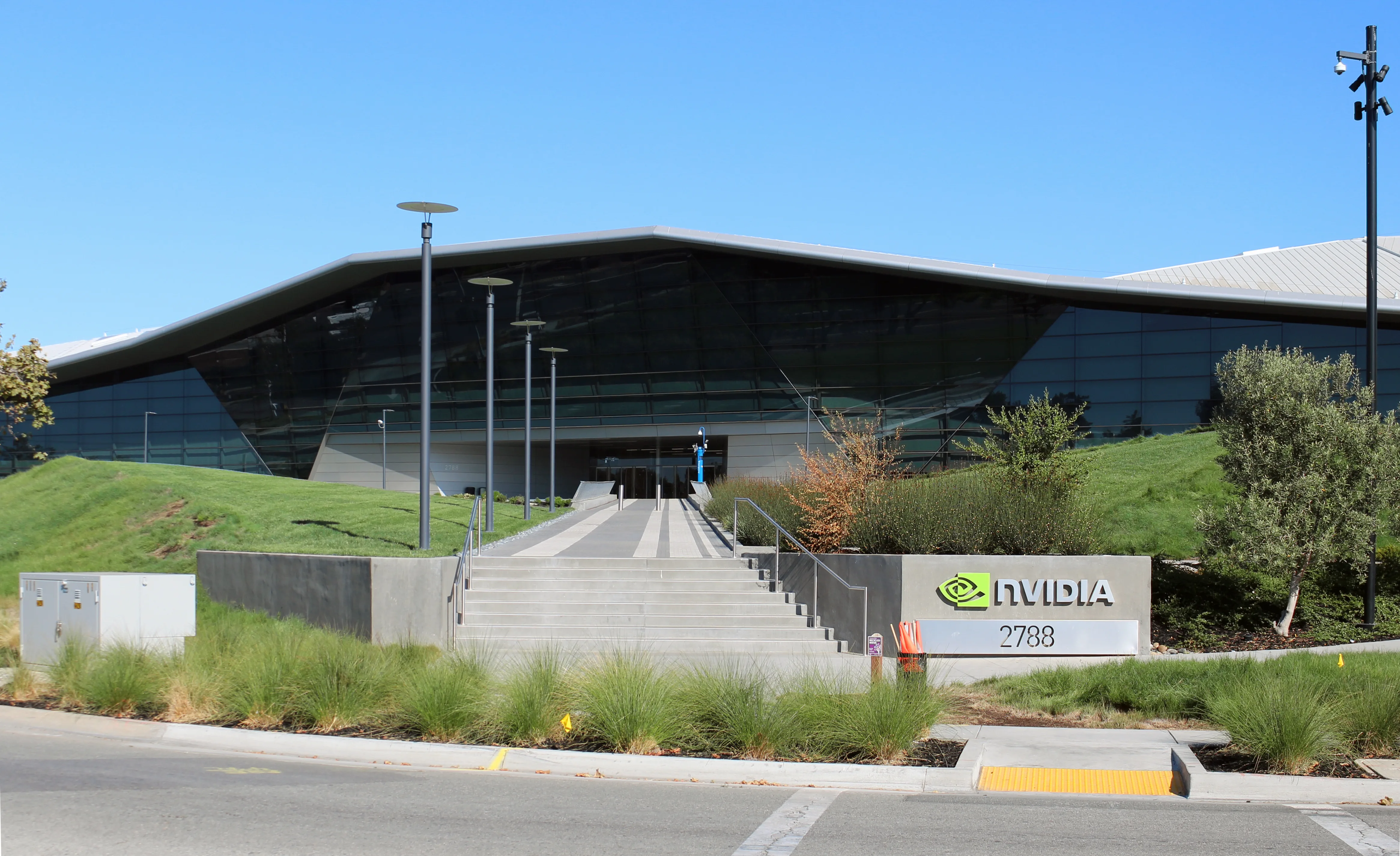
The chipmaker's participation is the most informative part of this round. Starcloud flew an H100 to orbit aboard Starcloud-1 in November 2025. It says it remains the only operator running a terrestrial data center GPU in space, and the first to train a model on one.
Most other space-bound accelerators are edge processors. That distinction is the whole argument. Starcloud is feeding its telemetry back to Nvidia as the company designs Vera Rubin Space-1, its first GPU built specifically for orbit.
Nvidia claims the Space-1 module will deliver up to 25 times the AI compute of an H100. Johnston said Nvidia ran deeper technical diligence than any venture investor he dealt with. The part is not built yet, and Starcloud hopes to fly it in late 2028.
Three engineering variables are driving the design. One is the relationship between chip operating temperature and radiator area, since orbit offers no convection. Another is where radiation shielding gets placed. The third is surviving the mechanical violence of launch itself.
The unresolved question
Nothing about the funding validates the underlying economics. Orbital inference only beats a terrestrial rack if launch costs fall far enough to offset the cost of building hardware that survives space, and that assumption rests entirely on Starship performing as advertised.
Investors are effectively taking a position on a rocket program, not just a satellite company. The FCC filing for 88,000 spacecraft signals ambition rather than a schedule. Regulatory approval of that scale would also raise orbital congestion questions the industry has not settled.
What the round does buy is time and a supply chain. In a market where launch slots are becoming the scarce input, capital that can be converted into booked capacity is a real advantage.