
Ant's LingBot-Touch Unifies 3 Touch Sensors
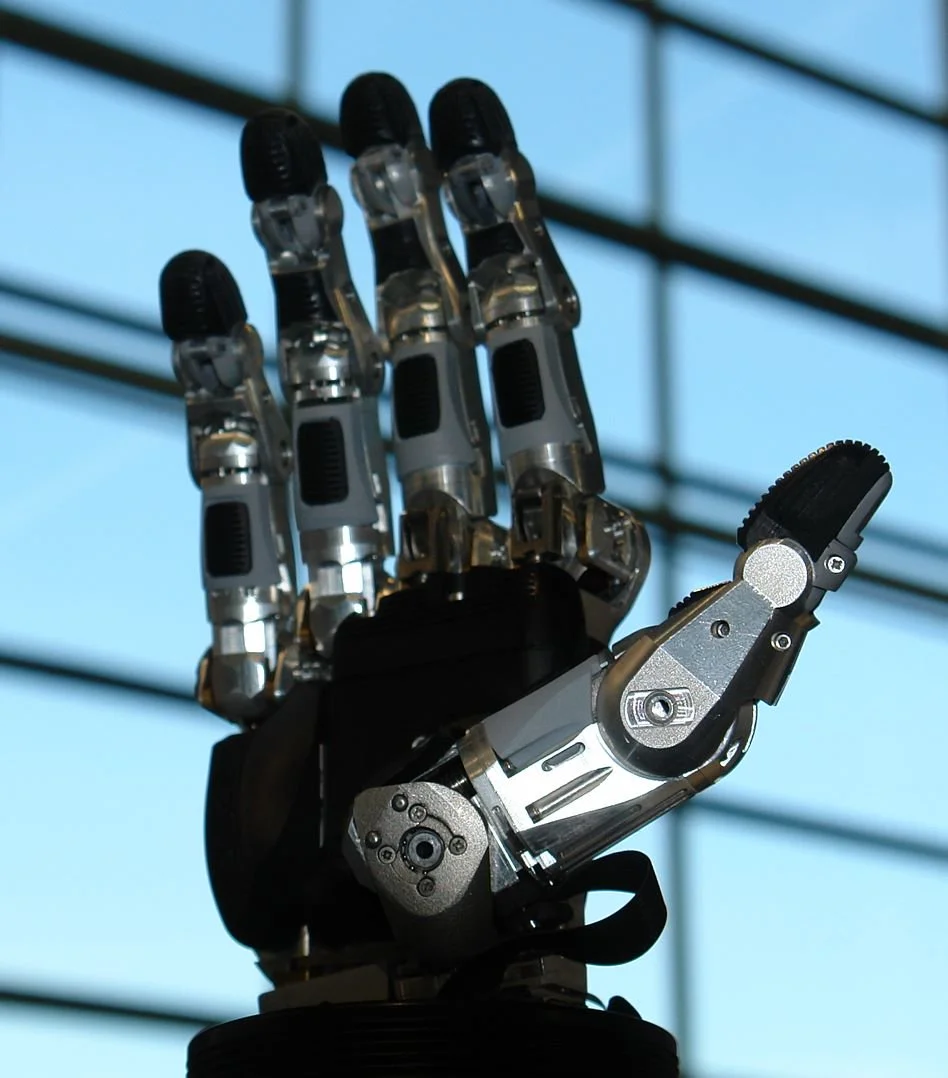
Ant Group's embodied-AI unit Robbyant on Nov. 9 released LingBot-Touch, an open tactile foundation model that maps piezoresistive, magnetic and visuotactile sensor data into one representation. Pretrained on 4,983 hours of recordings, its smallest encoder has 5.46 million parameters; the team tested it on 26 real-world tasks with two robotic hands.
Robbyant, the embodied-AI unit of China's Ant Group, on Nov. 9 released LingBot-Touch, an open tactile foundation model that turns readings from three different kinds of robot touch sensors into one shared representation. The team says the resulting "tactile tokens" can be plugged into existing robot control policies to improve dexterous manipulation, and has published the code and two model checkpoints under the Apache 2.0 license.
Key takeaways
- LingBot-Touch maps piezoresistive, magnetic and visuotactile sensor data into a single latent space instead of training one model per sensor.
- It was pretrained on 4,983 hours of touch recordings: 464,431 episodes and roughly 1.33 billion frames from tactile gloves and robot hands.
- The smallest encoder has 5.46 million parameters, and the team says it transfers to tactile sensors it never saw in training. All results are the developers' own.
What is LingBot-Touch?
Robot touch sensors come in incompatible flavors. Piezoresistive pads measure pressure, magnetic skins report three-axis force, and visuotactile sensors infer contact from a camera watching a soft surface. The authors write that each type offers "irreplaceable strengths alongside its own drawbacks," which has kept tactile data fragmented.
LingBot-Touch handles this with sensor-specific tokenizers that feed a shared "Haptic Transformer." It is trained in the JEPA style, predicting hidden parts of a touch sequence in latent space rather than raw signals. A canonical geometric interface maps each fingertip's sensor points into a common coordinate system.
LingBot-Touch training data and results
According to the project page, the pretraining corpus breaks down as follows:
| Sensor type | Hours | Episodes |
|---|---|---|
| Piezoresistive | 2,197 | 86,906 |
| Visuotactile | 1,650 | 82,654 |
| Magnetic | 1,136 | 294,871 |
| Total | 4,983 | 464,431 |
For real-world tests, the team added frozen LingBot-Touch features to three policy types: diffusion policy, the π0.5 vision-language-action model and Robbyant's own LingBot-VLA. It ran 26 tasks on Sharpa Wave and XHand robotic hands, 20 trials per task, comparing each policy alone, with raw tactile input, and with LingBot-Touch.
Demonstrations include seating a key in a lock, dispensing toothpaste by pressure and sealing a resealable bag. In 12 simulated reinforcement-learning tasks, the team compared LingBot-Touch with no touch input and with a tactile CNN. It also reports that real-robot success kept rising as pretraining data grew toward 5,000 hours. AI Newsway could not open the full paper PDF to verify per-task success rates.
Context: Ant Group's robotics push
Robbyant open-sourced LingBot-VLA in January, describing it as a "universal brain" for robots pretrained on more than 20,000 hours of real-world data across nine dual-arm robot setups, AI Insider reported. LingBot-Touch adds a sense of touch to that stack.
Large models are increasingly being tested on physical hardware, as in our report on how GPT-6 Astra finished a real cone course at 0.94 mph. Touch remains one of the least standardized inputs in that work.
What's next
The GitHub repository ships only the frozen encoder for inference, not the training code. Weights are hosted on Hugging Face and ModelScope, and the README says access requires an account with permission to the model repository. Independent labs have not yet reproduced the results.
FAQ
Does LingBot-Touch use camera images?
Not directly. For visuotactile sensors, the model takes decoded scalar deformation or intensity values, not raw RGB images, according to its model card.
Can it run without a GPU?
The repository's example commands run inference on a CPU, with an option to switch to an Nvidia GPU.
References
- Learning Heterogeneous Tactile Representation for General Dexterous Manipulation — arXiv (Nov. 9, 2026)
- LingBot-Touch Tactile Foundation Model — Robbyant (Nov. 2026)
- Robbyant/lingbot-touch — GitHub (Nov. 2026)
- Robbyant Open-Sources LingBot-VLA as a "Universal Brain" for Robots — AI Insider (Jan. 28, 2026)
Editor responsible for AI Newsway. Writes about AI, developer tools, cloud and productivity technology.


Comments 0
Comments are currently disabled.