
GPT-Rosalind-6 Reuses Astra, Refuses Less
OpenAI on Oct. 30 detailed GPT-Rosalind-6, a biology and drug discovery model that uses GPT-6 Astra's weights unchanged, refuses fewer dual-use biology questions, is limited to vetted organizations, and is priced at $15/$75 per million tokens.
OpenAI on Oct. 30 detailed GPT-Rosalind-6, a biology and drug discovery model built on the exact same weights as its flagship GPT-6 Astra. A system card addendum posted to OpenAI's Deployment Safety Hub says the model refuses far fewer dual-use biology questions and is open only to vetted organizations through a trusted access program.
OpenAI's API pricing page lists the model, gpt-6-rosalind, at $15 per million input tokens and $75 per million output tokens. That is 1.5 times the standard rate for GPT-6 Astra.
Key takeaways
- GPT-Rosalind-6 uses GPT-6 Astra's weights with no additional training data or post-training; the difference lies in its safeguards and refusal behavior.
- On a biorisk knowledge test, it refused 9.4% of questions, compared with 29.2% for GPT-6 Astra.
- Access requires approval through OpenAI's trusted access program, and the API price is $15 input and $75 output per million tokens.
What GPT-Rosalind-6 is
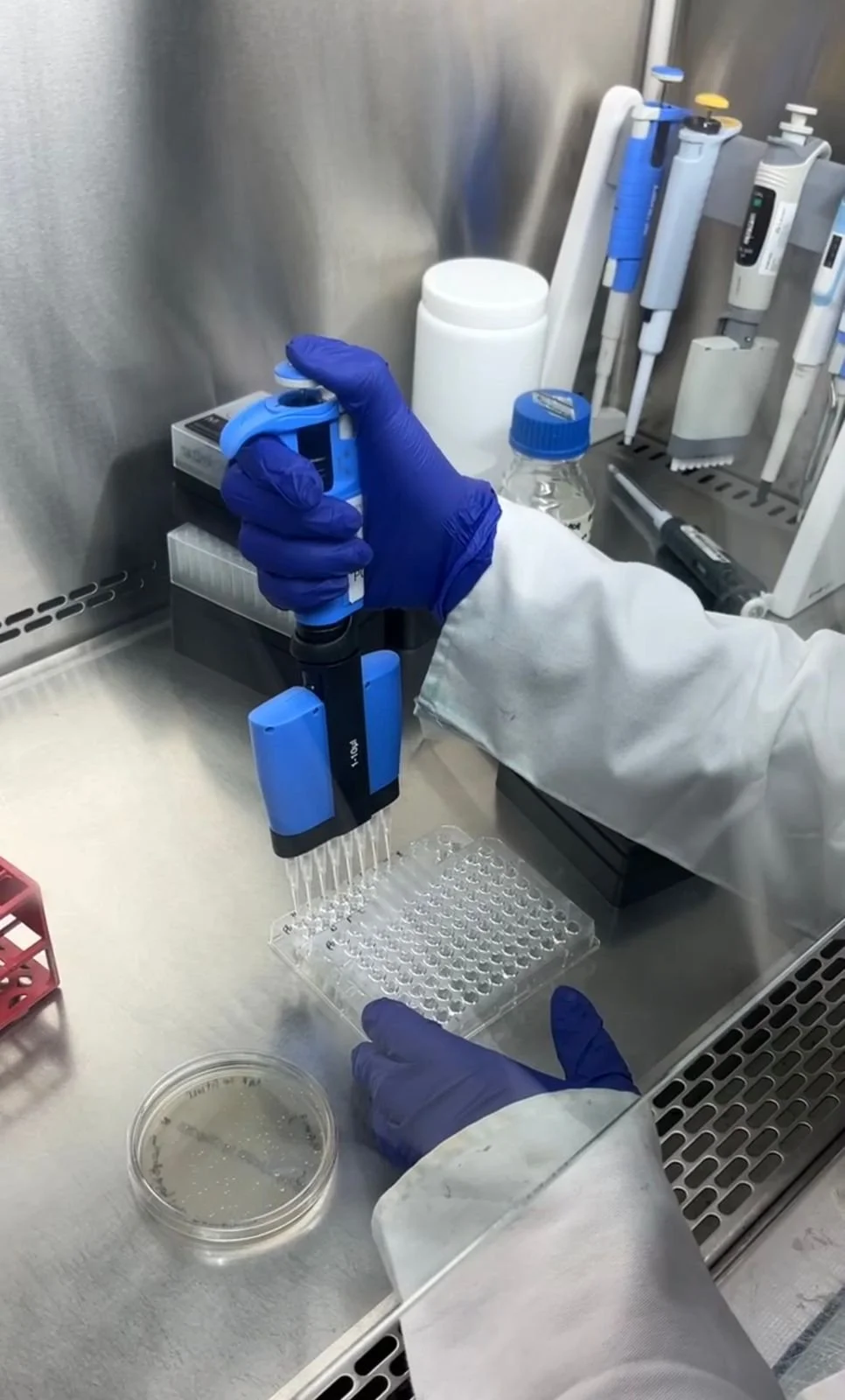
OpenAI calls GPT-Rosalind-6 a "frontier reasoning model for biology, drug discovery, and translational medicine." It is sold as GPT-Rosalind-6 Research to qualified scientists, research institutes, companies and government partners.
The system card states plainly that the model shares GPT-6 Astra's weights and received no extra training. What changes is the policy layer. The model gives "fewer refusals on dual-use biological queries," including some topics GPT-6 Astra may refuse for general users. It is still tuned to refuse requests that would meaningfully enable severe biological weaponization, and standard cyber safeguards, including real-time blocking, remain in place.
GPT-Rosalind-6 benchmarks vs. GPT-Rosalind-5.5
OpenAI reports large gains over the previous life sciences model at the highest reasoning setting.
| Benchmark | GPT-Rosalind-6 | GPT-Rosalind-5.5 |
|---|---|---|
| MedChemBench v7 (99 problems) | 49.6% | 28.9% |
| GeneBench Pro v13 (129 problems) | 37.7% | 16.7% |
| LifeSciBench Gold (94 problems) | 61.3% | 44.0% |
On TroubleshootingBench, a test of lab troubleshooting know-how, the model answered 491 of 832 questions correctly, about 59%, against an indicative "High" threshold of 36.4%.
Biosecurity rating and safeguards
Under OpenAI's Preparedness Framework, the model is rated High in biological and chemical capability, below Critical. OpenAI says that after adjusting for refusals, it exceeds the indicative High thresholds on three of four High evaluations, while none of the Critical evaluations met their thresholds. It inherits GPT-6 Astra's Critical rating in cybersecurity.
Because the model answers more, OpenAI leans on who gets in. Non-government applicants face business verification and compliance screening, and OpenAI reviews each applicant's proposed uses, security controls and governance. Enterprise customers must limit access to authorized users and apply qualified human review before outputs inform experiments, publications or consequential decisions. OpenAI says it can restrict or revoke access and is repeating for GPT-Rosalind-6 a biosecurity red-team exercise it ran on GPT-Rosalind-5.5.
Context: OpenAI's life sciences push
The Rosalind line began on April 16, 2026, when OpenAI introduced GPT-Rosalind as a research preview for qualified U.S. enterprise customers. Early users named at launch included Amgen, Moderna, the Allen Institute and Thermo Fisher Scientific.
The pricing page now lists three Rosalind rows. The older gpt-rosalind-research and gpt-rosalind-discovery models cost $5 input and $25 output per million tokens, a third of the new model's rate. The page notes that "access is limited to approved internal research through the trusted-access program."
What's next
OpenAI has not published a customer list for GPT-Rosalind-6. Its red-team results for the new model are still pending, and the company is withholding details of that exercise. The release also tests a pricing idea: charging more for the same weights when the product is looser guardrails plus tighter vetting.
FAQ
Is GPT-Rosalind-6 a new model?
Not in terms of weights. OpenAI says it uses GPT-6 Astra's weights with no added training; it differs in safeguards, refusal behavior and access rules.
Who can use GPT-Rosalind-6?
Only organizations approved through OpenAI's trusted access program, including qualified scientists, research institutes, companies and government partners working on approved uses.
How much does GPT-Rosalind-6 cost?
OpenAI's API pricing page lists $15 per million input tokens and $75 per million output tokens, versus $10 and $50 for standard GPT-6 Astra.
References
- GPT-Rosalind-6 System Card Addendum — OpenAI Deployment Safety Hub (Oct. 30, 2026)
- Pricing — OpenAI API documentation (accessed Oct. 31, 2026)
- Introducing GPT-Rosalind for life sciences research — OpenAI (April 16, 2026)
Editor responsible for AI Newsway. Writes about AI, developer tools, cloud and productivity technology.



Comments 0
Comments are currently disabled.