
Lean Checks Clear Claude's Riemann Proof
Independent machine checks by Michael Rubinstein (Waterloo) and Andrew Sutherland (MIT) found no errors in the 175,187-file Lean proof of the Riemann hypothesis that Anthropic's Levent Alpöge announced on Nov. 20 and says he found with Claude. Human refereeing has not begun.
Independent mathematicians said on Nov. 21 that their machine checks found no errors in the formal Lean proof of the Riemann hypothesis that Anthropic mathematician Levent Alpöge announced a day earlier and says he found with the company's AI model Claude. The checks confirm that the code proves what it states. Human review of the mathematics itself has only just begun.
Key takeaways
- Alpöge released the proof only as Lean code: 175,187 files and about 17.4 million lines, covering the Riemann hypothesis and its generalization to Dirichlet L-functions.
- Separate checks led by Michael Rubinstein (University of Waterloo) and Andrew Sutherland (MIT) compiled every module and found the five main theorems rely only on Lean's three standard axioms.
- No referee has yet read the argument, and Alpöge says he has not mastered all of it himself.
What Alpöge announced on Nov. 20
"I believe I have, working with Claude, discovered a proof of the Riemann Hypothesis," Alpöge wrote in a four-page note posted on his website. He said the method also resolves the Generalized Riemann Hypothesis and that he expects, "with more time," to reach the Extended Riemann Hypothesis too.
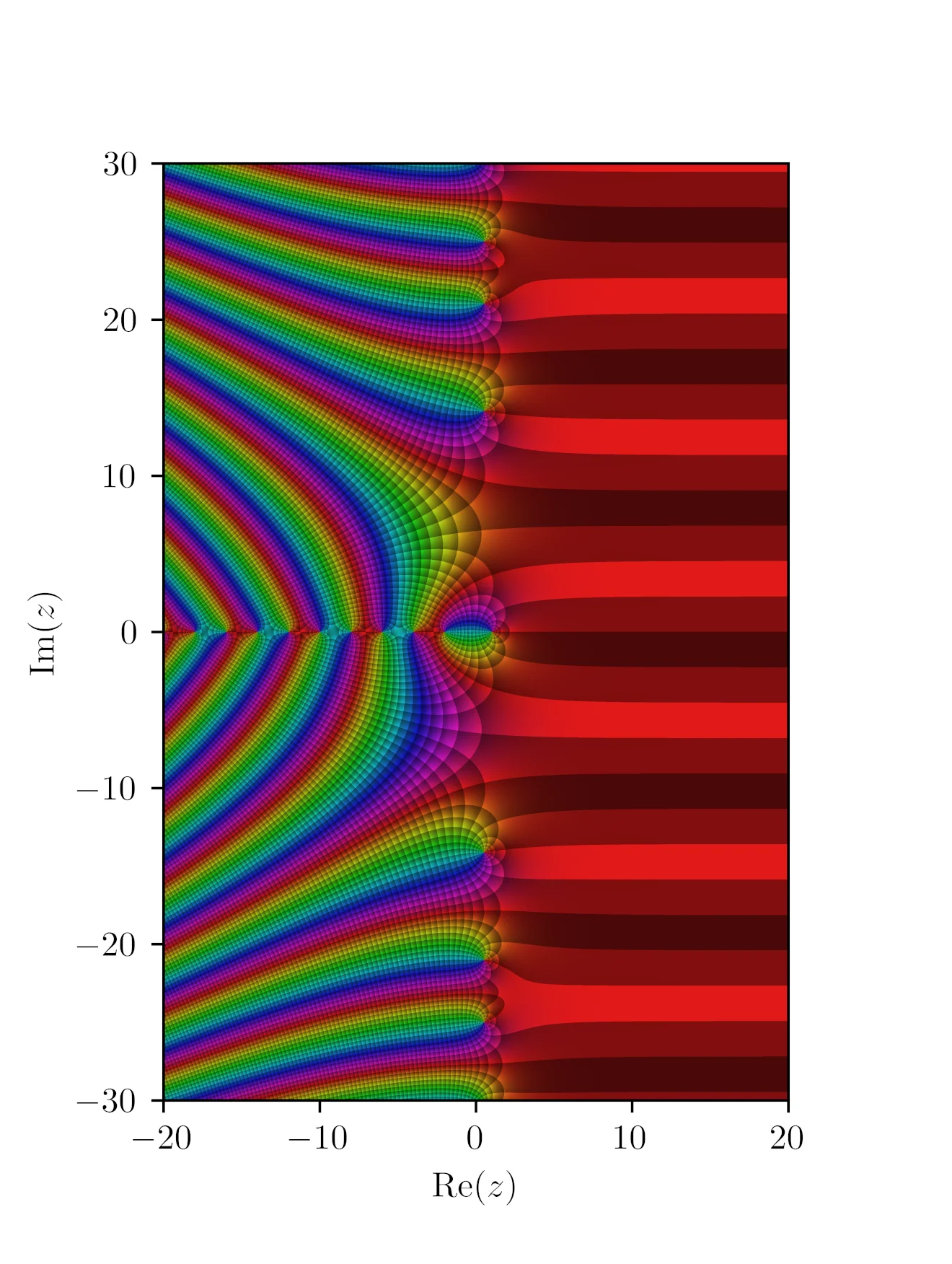
Bernhard Riemann posed the hypothesis in 1859. It says every nontrivial zero of the zeta function has real part 1/2, which controls how prime numbers are distributed. It is one of the Clay Mathematics Institute's $1 million Millennium Prize Problems.
Alpöge did not post a paper. A footnote says a full write-up he generated passed 250,000 pages, and he called posting such a document inappropriate. A research timeline in the note, which he says Claude compiled, runs from Oct. 6 to Nov. 16, 2026. "Claude flew, and danced, and sparkled near that finish line," he wrote.
How the Lean proof was checked
Rubinstein's team ran its checks with Claude Code on university servers. By 10:06 UTC on Nov. 21, all 175,187 modules had compiled with zero errors, a replay through Lean's kernel accepted every module, and nanoda, an independently written Rust kernel, checked 1,484,729 declarations without a typechecker error, according to the published verification log.
Sutherland's MIT page, updated at 02:25 UTC on Nov. 22, reports matching results. A sandboxed rebuild on a separate machine reproduced the exported proof byte for byte, and two comparison tools confirmed all five theorems against the official statements. A final Lean kernel run on the export was still in progress.
What the checks do not cover
The verified scope is narrower than the headline phrase "GRH." Sutherland's page says it covers Dirichlet L-functions only, not Dedekind zeta functions or automorphic L-functions in general. A machine check also relies on the Lean kernel being sound and on Mathlib's definitions meaning what mathematicians intend.
Reaction is split. James Maynard of Oxford said he was "98 or 99 percent" certain, and Stanford's Brian Conrad called releasing a proof Alpöge does not fully understand "frankly completely outrageous," both speaking to The New York Times, as reported by The Next Web. A community dashboard notes "the mathematics has not yet been refereed."
What's next
Alpöge says he intends to understand, simplify and properly write up the argument. Rubinstein has posted a 165-page working guide to the zeta case, written with Claude, Codex and Gemini, though one key inequality in it still comes from the Lean code rather than a written proof. Expect expositions, shorter proofs and a long human refereeing process.
FAQ
Is the Riemann hypothesis now proved?
The Lean proof has passed every independent machine check reported so far. Formal peer review by mathematicians has not happened yet.
What did Claude do?
Alpöge credits Claude with much of the final work, including suggesting a chain of theta lifts of length √X, a central technical step.
Can anyone check it?
Yes. The archive, scripts and logs are public; Sutherland's page lists commands needing roughly 100 GB of RAM.
References
- remark.pdf — Levent Alpöge (Nov. 20, 2026)
- An independent check of the Lean proof of RH and GRH — Michael Rubinstein, University of Waterloo (Nov. 21, 2026)
- Verification files for the Lean proof of the Riemann Hypothesis — Andrew Sutherland, MIT (Nov. 22, 2026)
- The announced proof of the Riemann hypothesis: map, guide and record of checks — Bartosz Naskręcki
- Anthropic mathematician says he and Claude proved the Riemann hypothesis — The Next Web (Nov. 21, 2026)
Editor responsible for AI Newsway. Writes about AI, developer tools, cloud and productivity technology.


Comments 0
Comments are currently disabled.