
Math Chair: Judge Every Paper as AI-Assisted
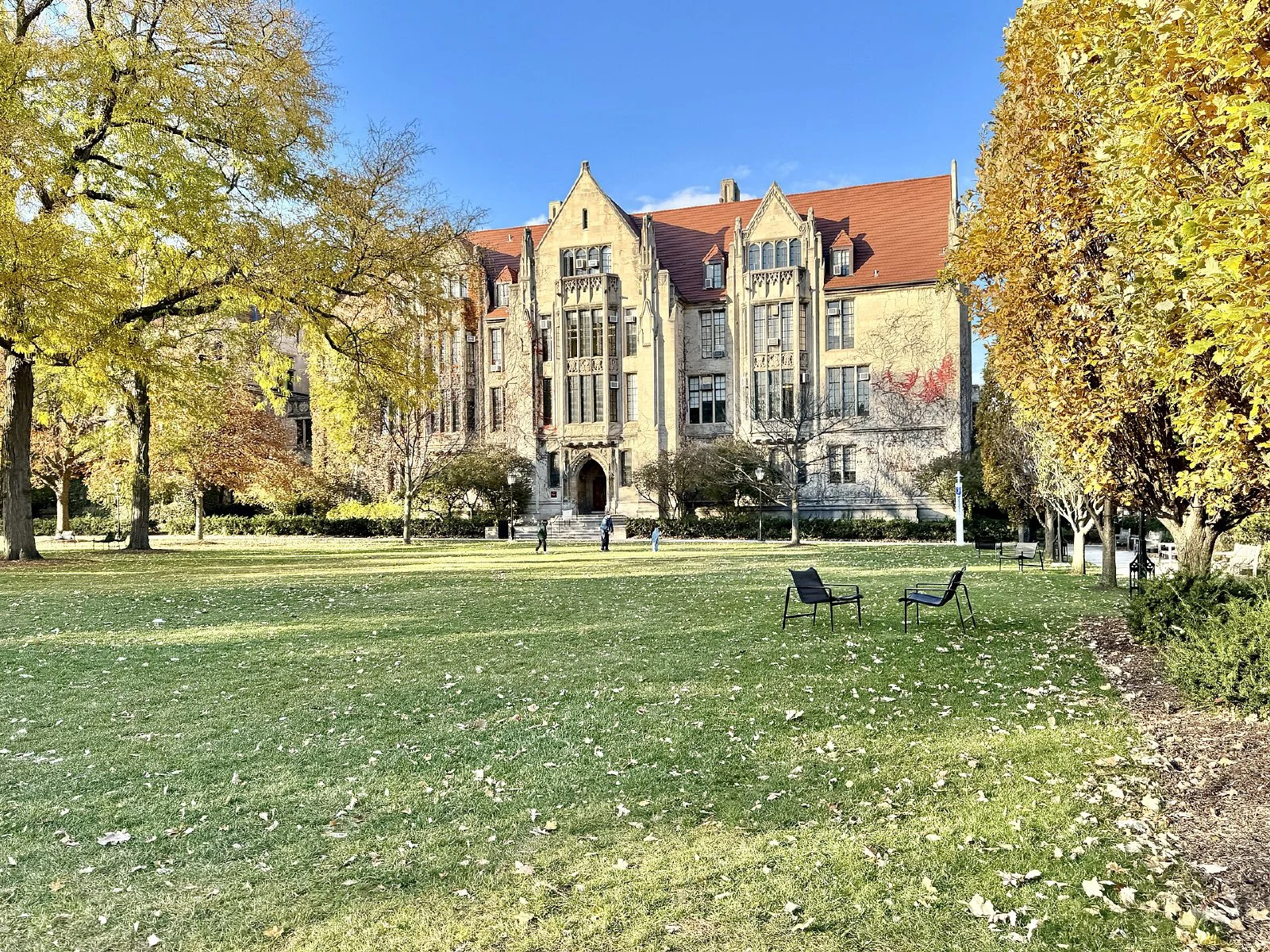
In a Nov. 1 guest post on Terence Tao's blog, University of Chicago math chair Frank Calegari urged mathematicians to evaluate all work as if AI-assisted, interview candidates in person, demand more of journals and take collective ownership of AI-made results.
University of Chicago mathematics chair Frank Calegari told fellow mathematicians on November 1 to evaluate all research as if it were AI-assisted, arguing in a guest post on Terence Tao's blog that AI has permanently changed the field. The essay, titled "Mathematics has changed. Let's act like it.," calls for in-person hiring interviews, tougher journals and shared ownership of machine-made results.
Key takeaways
- Calegari calls OpenAI's October 6 release of more than 700 AI-produced papers "a watershed in the history of mathematics," while saying many are badly written and some are wrong.
- He proposes judging papers on two questions: "Is the paper telling a compelling story? Is it Lean-verified?"
- He urges in-person interviews for postdocs and graduate students, because a paper file no longer shows who did the work.
What Calegari argues about AI in mathematics
Calegari is a number theorist who works on the Langlands program, according to his university profile. His essay opens bluntly: "AI is now undeniably capable of making groundbreaking contributions across many areas of mathematics." He then asks: "So why are some mathematicians so unhappy?"
Part of his answer is the way the work arrived. He writes that the OpenAI papers, "despite some tremendous ideas," are "atrociously written" and "violate our community expectations of attribution." He adds: "Some of them are even wrong."
He also cites probabilist Hugo Duminil-Copin, who said that none of the major open problems he had publicly mentioned in his career was left untouched by the release.
How OpenAI's math papers changed the debate
OpenAI posts the manuscripts in a public GitHub repository. On November 2 the repository listed 721 manuscripts in 373 families and said about 42% of top-line results are formalized in the Lean proof assistant. The README credits an unnamed internal OpenAI model.
Some headline claims from the effort are still under outside review, including an OpenAI Navier-Stokes result that landed with an asterisk.
Proposed changes to hiring, journals and credit
Calegari's first rule is to evaluate all work as if it were AI-assisted. "The hiring process is going to have to be much more about personal interactions than a paper file," he writes.
He asks the field to demand more of journals and leave those that do not adapt. He says many arXiv papers should not be published anywhere and points to Essential Number Theory as a model for journals that stress utility and clarity.
On credit, he argues that "Mathematicians as a profession would do well to take more ownership of these results," crediting humanity's shared mathematical heritage rather than any single company or personality.
Context: when a proof becomes cheap
Calegari uses history to make his point. In 1903, Frank Nelson Cole factored 2^67 − 1 into 193,707,721 × 761,838,257,287, a major feat at the time. A computer algebra system now does it in under a second, so the same result would count for far less today.
He also recalls the classification of finite simple groups, a program Daniel Gorenstein launched in 1972 and announced as complete in 1983, which he says cooled interest in that field. His conclusion: "Choosing worthwhile problems may end up mattering more than producing proofs."
What's next
The proposals depend on departments and journals adopting them. Calegari directs one challenge at tenured researchers: "If you, as a senior mathematician, are stressed about being scooped by AI, then you are not being ambitious enough." He ends on an optimistic note: "We are on the verge of a new era of mathematics, and I am excited to see what happens."
FAQ
Who is Frank Calegari?
He is a professor and chair of the Department of Mathematics at the University of Chicago, working in algebraic number theory.
What is Lean verification?
Lean is a proof assistant that checks a proof step by step by machine. Calegari treats it as one of two main tests for a paper, alongside whether it tells a compelling story.
References
- Mathematics has changed. Let's act like it. — Frank Calegari, guest post on Terence Tao's blog "What's new" (Nov. 1, 2026)
- openai/math — GitHub (accessed Nov. 2, 2026)
- Frank Calegari — University of Chicago Department of Mathematics
Editor responsible for AI Newsway. Writes about AI, developer tools, cloud and productivity technology.

Comments 0
Comments are currently disabled.