
Revolut's Self-Hosted GLM Cuts AI Bill 90%
Revolut now pays about one-tenth of its former Anthropic and OpenAI spend for AI coding after self-hosting Z.ai's open-weight GLM models on 56 B200 GPUs, ops and infrastructure leader David Abitbol said at AI Engineer NYC 2026.
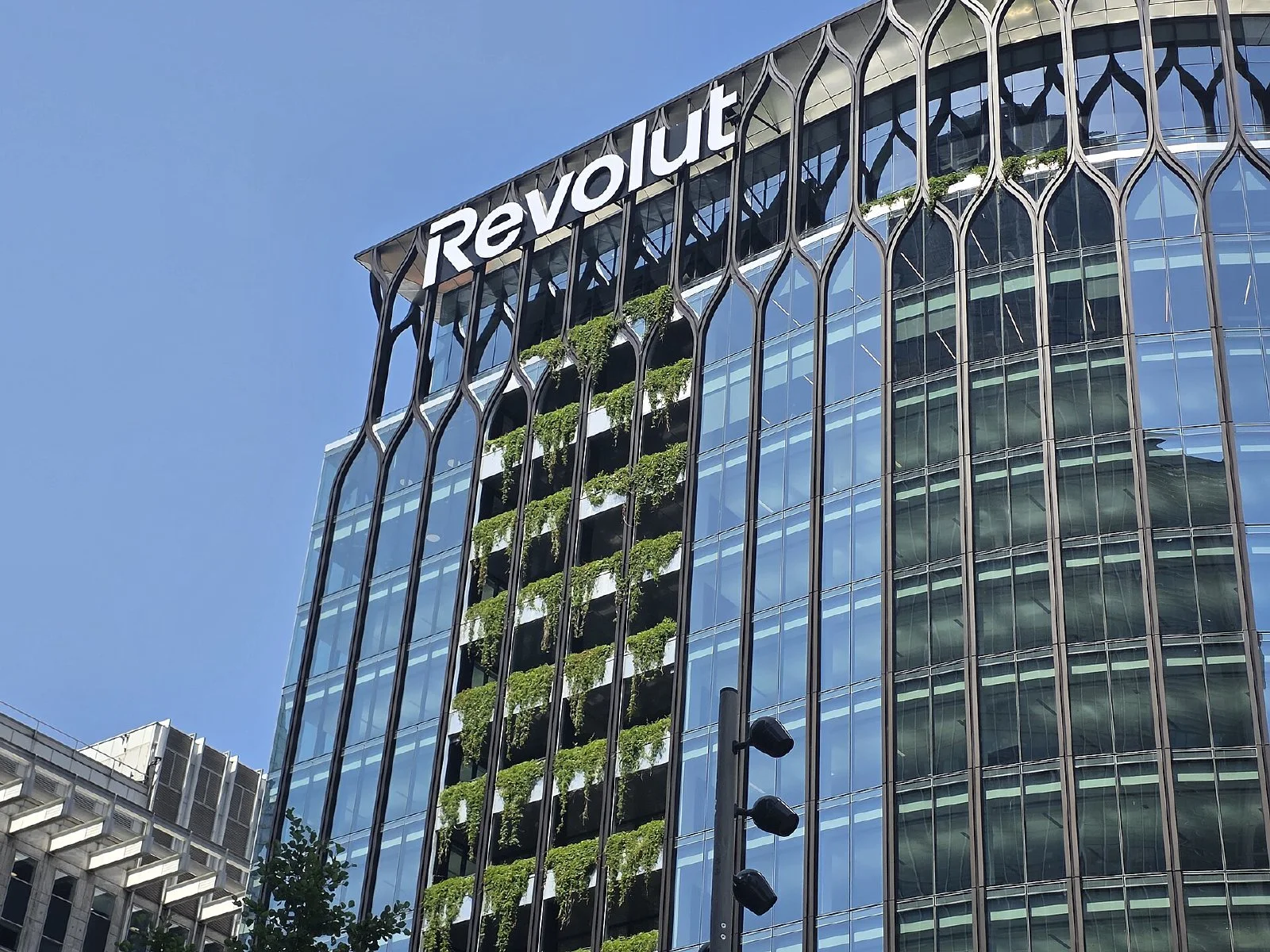
Revolut now pays roughly one-tenth of what it used to spend on Anthropic and OpenAI for AI coding, after moving its roughly 2,000 engineers onto open-weight GLM models that it runs on its own GPUs. David Abitbol, the digital bank's ops and infrastructure leader, laid out the numbers in an October 13 talk at AI Engineer NYC 2026, which The Register reported on November 3.
The bank, which says it has 80 million customers in 45 markets, serves Z.ai's GLM 5.3 from 56 Nvidia B200 GPUs at a blended cost Abitbol put at "30 cents per million" tokens.
Key takeaways
- Revolut self-hosts GLM 5.3 on 56 B200 GPUs for about 2,000 engineers; its AI coding invoice is one-tenth of its former Anthropic and OpenAI spend.
- Tuning on the same 56 GPUs raised throughput from about 3 to more than 7 requests per second and cut time to first token from 14.26 to 1.68 seconds.
- The bank reports 60% faster coding time and 70% faster lead time, but its own talk notes the comparison does not isolate the model change.
How Revolut self-hosts GLM for AI coding
According to the talk, Revolut first rolled out Gemini, then Claude Code under strict budget limits, before it began self-hosting GLM 5.1 around April. Z.ai's Hugging Face page lists GLM-5.1 at 754 billion parameters under an MIT license. The Register reported that about 40 billion parameters are active per token.
Cost was the trigger. "We were highly skeptical about the cost of AI. We were seeing engineers spend $1,000 a month, $10,000 a month with not so much ROI," Abitbol said, as quoted by The Register. With a flat internal bill, he argued, engineers spend tokens on debugging and routine tickets they would otherwise skip.
Latency targets and GPU tuning
Abitbol said the team aims for time to first token under three seconds and about 200 tokens per second of generation. "As soon as you exceed 5 seconds, my Slack inbox starts to blow up," he said. Engineers working after 5 p.m. see speeds closer to 800 tokens per second as load drops.
Between April and August, the same 56 GPUs went from roughly 3 to over 7 requests per second, while time to first token fell from 14.26 seconds to 1.68 seconds. His advice included running FP4 quantization on Blackwell chips, choosing tensor-parallel layouts that leave room for the KV cache, and keeping cache hit rates above 90%.
He also pushed back on giant context windows. "Long context is a scam," he said, adding that about 256,000 tokens is what coding work needs.
Productivity claims and their limits
Revolut measured a 60% improvement in coding time and 70% in lead time for its engineering sample around the GLM 5.1 period, compared with 20% and 10% after the earlier Gemini rollout. The conference page's own summary cautions that the internal comparison does not separate the model change from other causes.
As an EU-regulated bank, Revolut runs coding agents in a sandbox with approval rules — Abitbol's example was allowing grep but not gradle — and defaults to zero data retention.
Why it matters for open-weight adoption
The case adds a large regulated user to a broader shift toward cheaper open-weight inference. Routing data shows open models already carry a large share of production traffic, and Chinese labs have driven much of it, as AI Newsway reported on OpenRouter's response to Chinese model traffic. The Register noted that privacy concerns about Chinese models mainly apply when using APIs hosted in China, not self-hosted weights.
What's next
Abitbol said open source is now a priority at Revolut and that the bank's economics favor it. The open question is whether the reported productivity gains hold as the bank upgrades models and adds users on fixed hardware.
FAQ
How much did Revolut save on AI coding? Abitbol said the bank's invoice is one-tenth of what it had spent on Anthropic and OpenAI, a cut of about 90%.
What hardware does Revolut use? It serves GLM 5.3 to about 2,000 engineers on 56 Nvidia B200 GPUs.
Are the productivity figures independent? No. They are Revolut's internal measurements, and the talk notes they do not isolate the effect of the model switch.
References
- Shipping like a startup, regulated like a bank | AI Engineer NYC 2026 — AI Engineer (Oct. 13, 2026)
- zai-org/GLM-5.1 · Hugging Face — Z.ai
- British fintech Revolut slashes AI coding costs 10x by cutting out Claude and going self-hosted — The Register (Nov. 3, 2026)
Editor responsible for AI Newsway. Writes about AI, developer tools, cloud and productivity technology.


Comments 0
Comments are currently disabled.